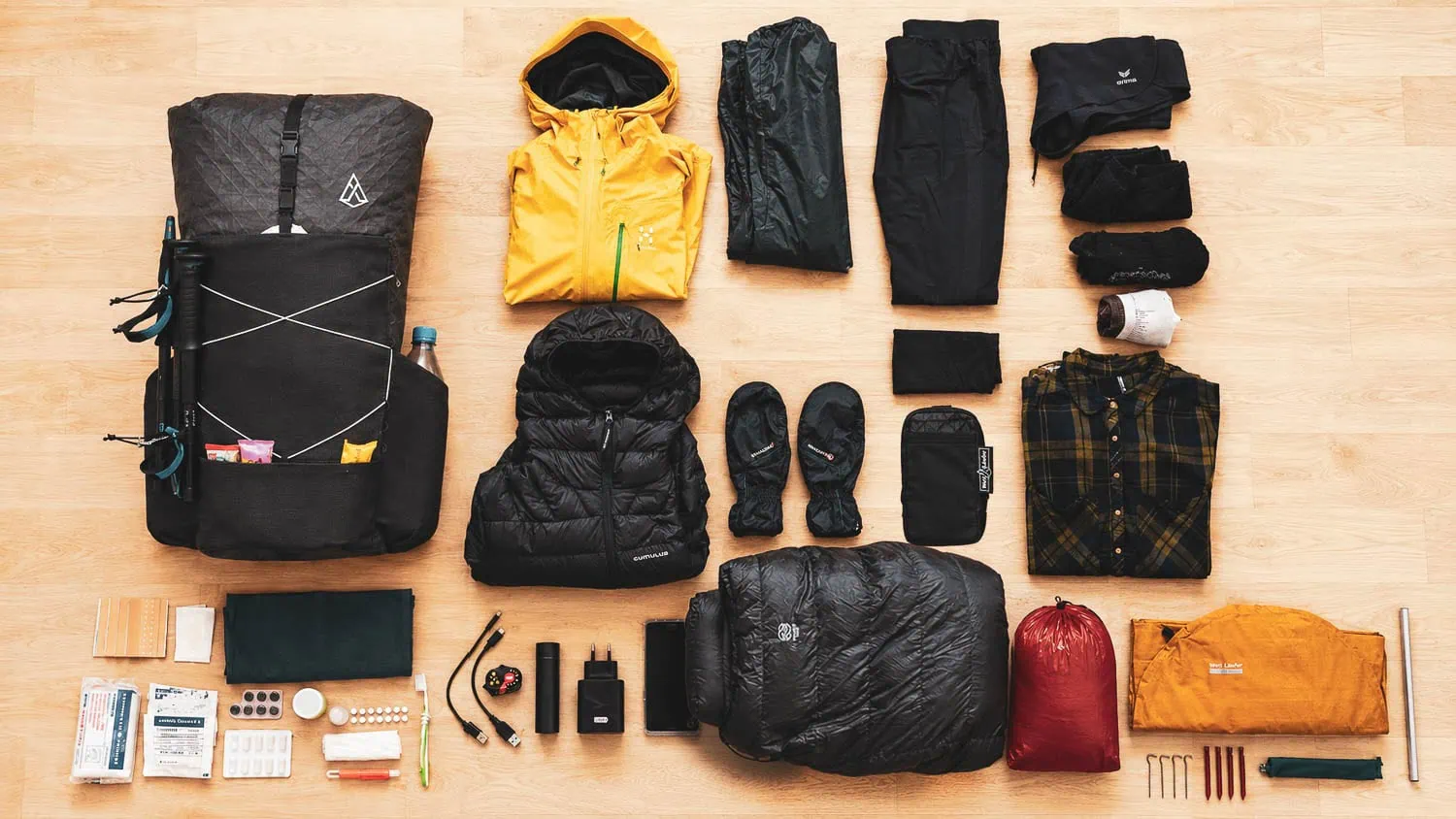
This packing list is the combination that we, as backpack manufacturers, recommend after years of testing and hiking ourselves for 3-season trekking in Central Europe. Featuring real gram weights, manufacturer comments, and the trade-offs that no affiliate blog will tell you.
What is base weight, and why is it the only number that matters?
Yours Basis weight (English: base weight) is the weight of your packed rucksack without consumables. This means without water, food, and fuel. This figure is the honest benchmark for comparing different setups, as consumables can vary significantly depending on the tour.
The common classification
| Category | Basis weight |
|---|---|
| Traditionally | over 10 kg |
| Lightweight | 5–10 kg |
| Ultralight | under 5 kg |
| Super-Ultralight (SUL) | under 3 kg |
Under 5 kg: That is the threshold where trekking changes fundamentally. Not because the number is magical, but because from here on you no longer need a heavy frame backpack, shorter stages suddenly become optional and your knees no longer beg for mercy after day five.
The „Big Four“: where 80 % of the weight is concentrated
Four pieces of gear make up the majority of the base weight for most hikers:
- Rucksack (traditional: 1,500–2,500 g → UL: 400–700 g)
- Shelter/Tent (traditional: 2,000–3,000 g → UL: 500–1,200 g)
- Sleeping bag/quilt (traditional: 1,200–2,000 g → UL: 400–800 g)
- Insulated mat (traditionally: 700–1,000 g → UL: 300–500 g)
Optimising the Big Four often achieves a weight saving of 3 to 4 kg without leaving behind even a single sock. That is precisely why the rucksack is right at the top of the list: it is the lever with the greatest effect.
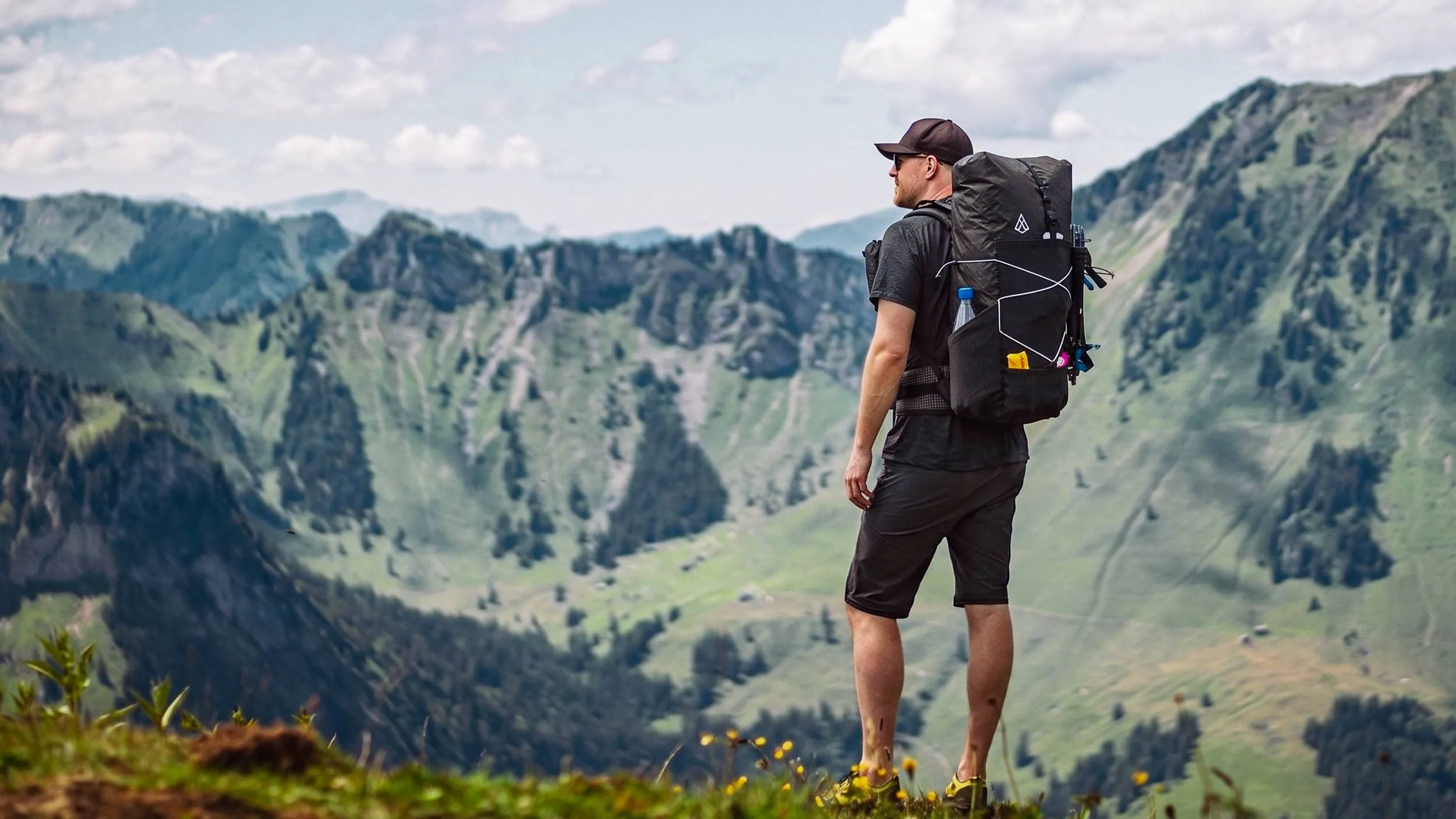
The complete ultralight packing list: Under 5 kg base weight
The following table shows a proven 3-season setup for trekking in Central Europe (Alps, low mountain ranges, Scandinavia in summer). All weights are actual weighed values, not from manufacturer specs.
| Item | Weight | Manufacturer's comment |
|---|---|---|
| WeitLäufer Agilist (2026, size M) | 570g | Most of the seams are taped, Ultra 200X waterproof: you can do without a rain cover. That’s 80–120 g less on your packing list. |
| Item | Weight | Manufacturer's comment |
|---|---|---|
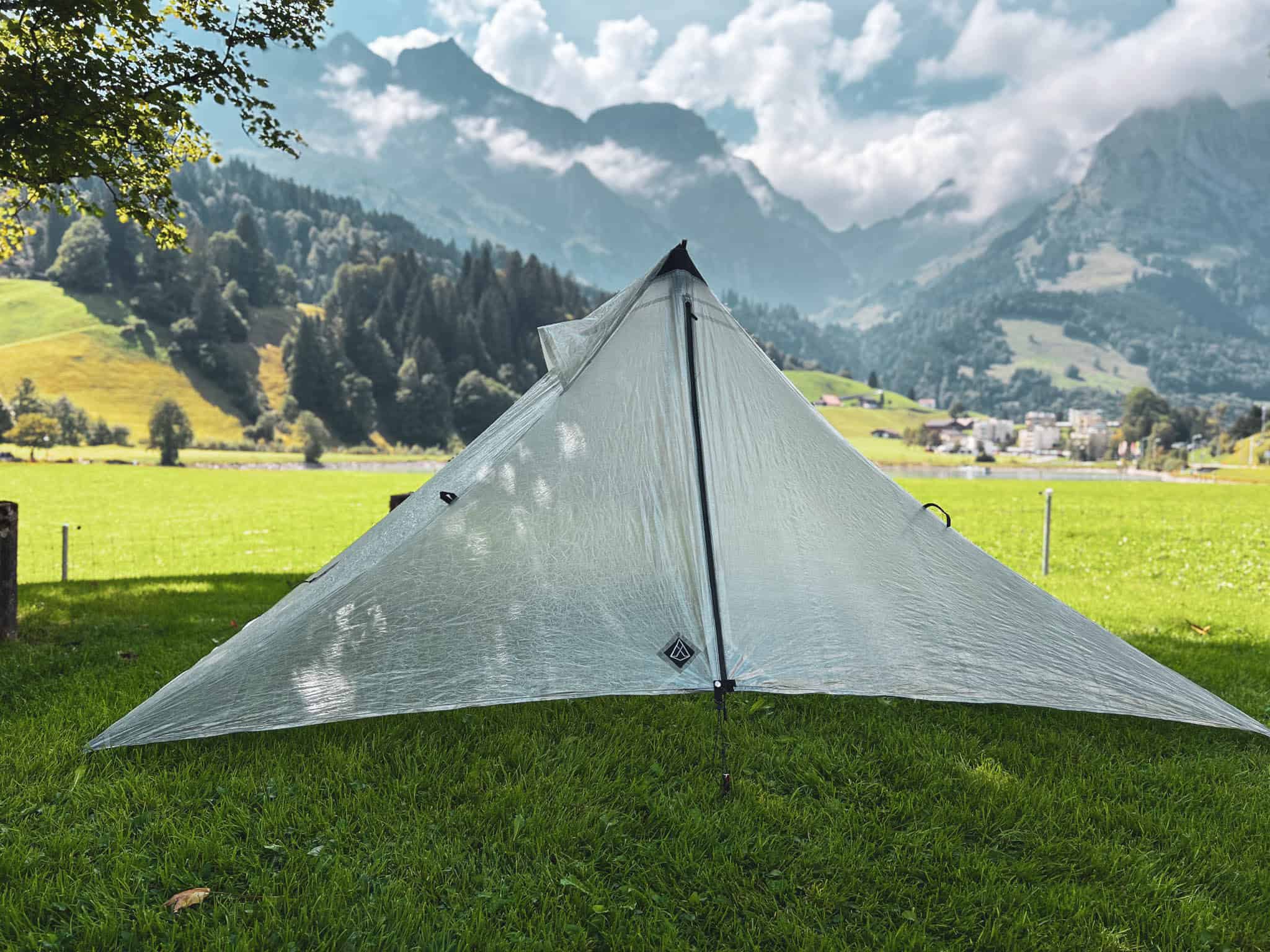
| Nordisk Lofoten 2 ULW or Durston X-Mid 1 Solid | ~750g | Single-wall tent or tarp + inner tent, both work. What counts is the ratio of weather protection to weight. For Central Europe, we recommend a enclosed shelter with a floor, because the weather conditions are too changeable for a pure tarp setup. |
| Pegs (6× Titan Shepherd's Hook) | 36 g |
| Item | Weight | Manufacturer's comment |
|---|---|---|
| Down quilt, 0–5 °C comfort Cumulus Quilt 300 | ~495 g | Quilt instead of a mummy sleeping bag: saves 150–250 g with the same thermal performance. Your back lies on the mat, and the down there provides no insulation anyway. A quilt consistently omits this. |
| Therm-a-Rest NeoAir XLite NXT Regular Sleeping Mat. | ~367g | R-value ≥ 4 for three seasons, the XLite NXT comes in at 4.5 according to the manufacturer.[1] The mat is the foundation of the sleep system. Skimping here costs you sleep, and sleep costs you miles and enjoyment on the tour. |
| Item | Weight | Manufacturer's comment |
|---|---|---|
| Spirit stove (e.g. Trail Designs Caldera Cone) or gas stove (BRS-3000T) | ~25–75g | Metholated spirit is lighter in the system (no heavy valve), but slower. Gas is more convenient. Both work, the choice depends on how much you cook. |
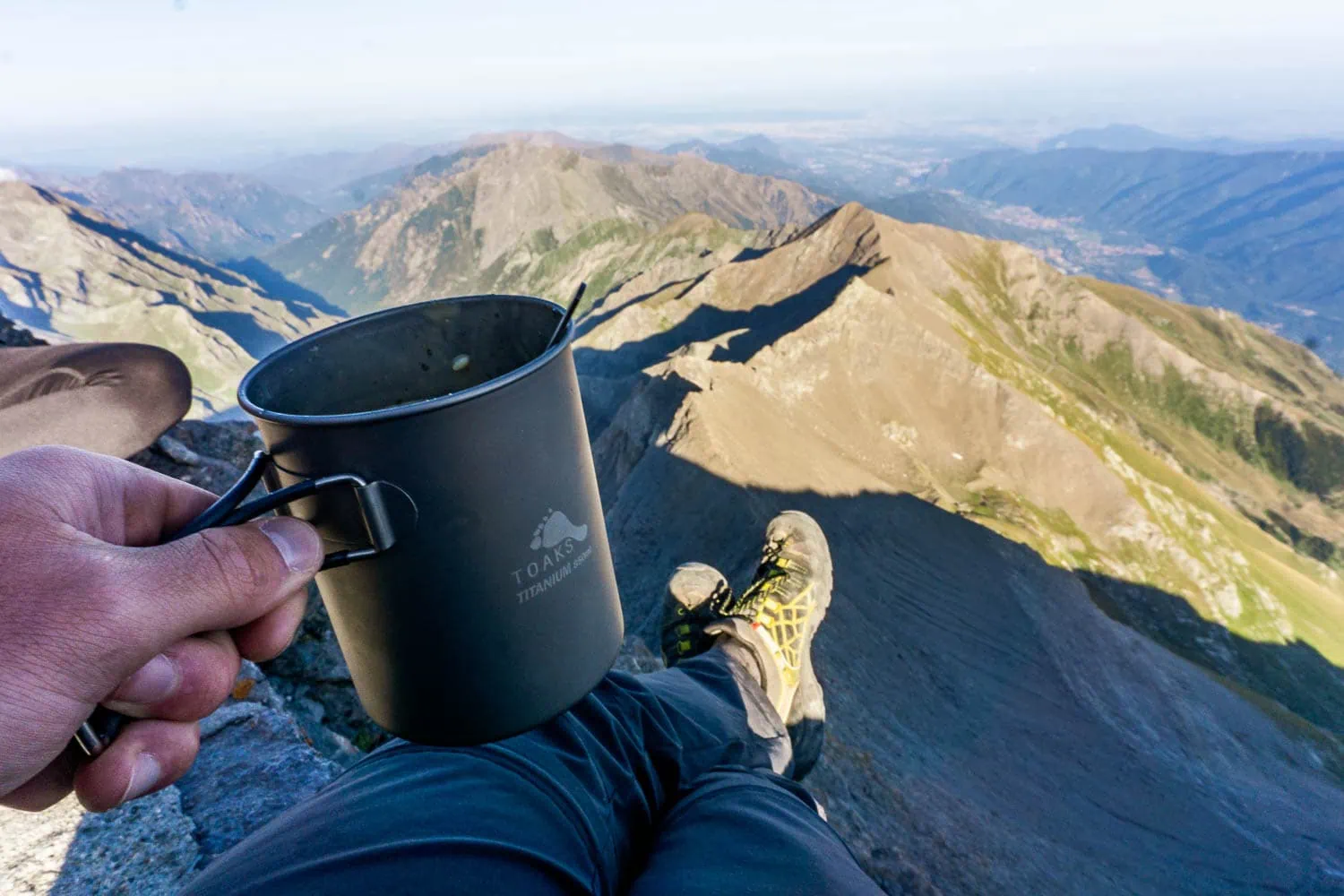
| Titanium Pot 650 ml (e.g. TOAKS or Evernew) | ~72g | |
| Titan spoon (long) | ~16 g | |
| Lighter (BIC Mini) | ~12g |
Clothing (worn on body = not in base weight)
What you wear when hiking doesn't count towards your base weight. What's in your rucksack does.
| Item | Weight | Manufacturer's comment |
|---|---|---|
| Waterproof jacket e.g. Outdoor Research Helium M | approx 180 g | The lightest layer that MUST be in the rucksack. Gore-Tex is overkill and too heavy for this, a 2.5L laminate is perfectly adequate for light trekking. |
| Insulation jacket (synthetic or down) Cumulus Inverse M | ~230g | For evenings at camp and cold passes. Synthetic fibre is more robust in damp conditions, down has a better warmth-to-weight ratio. |
| Exchange shirt (Merino wool, long-sleeved) | 150g | Sleeping and backup. Merino doesn't even smell after three days, synthetics smell much sooner. |
| Waterproof trousers, windproof trousers or rain skirt | ~50–80 g | Wind trousers (e.g. made of ripstop nylon, ~50 g) are sufficient in 90 % of cases. Full-length rain trousers are only needed for autumn/winter tours. |
| Spare socks (Merino) | ~50 g | |
| Buff/tube | 35 g | |
| Light fleece hat | Around 30 g | |
| Gloves (thin, fleece) | Around 30 g |
| Item | Weight | Manufacturer's comment |
|---|---|---|
| Toothbrush (shortened) + mini-tube of toothpaste | approx. 15 g | |
| Sunscreen (30 ml travel size) | 35 g | |
| First aid kit (minimized: tape, painkillers, blister plasters, antihistamine) | Approximately 80g | Don’t leave anything out, but sort through it thoroughly. Most first-aid kits weigh 60 % in their original packaging. Repacking them into Ziplock bags saves 30–50 g straight away. |
| Insect repellent (small rollerball) | Around 30 g | Seasonal. Scandinavia in July: mandatory. Black Forest in September: optional. |
| Toilet paper (half roll, cardboard out) + Ziplock | ~25 g | |
| Hand sanitiser (20 ml) | ~22 g |
| Item | Weight | Manufacturer's comment |
|---|---|---|
| Smartphone (as a camera, navigation, diary) | Approx. 175g | Replaces camera, GPS device, maps, and headlamp backup. Your most powerful multi-tool. |
| Power bank 10,000 mAh | approx 180 g | Sufficient for 3-4 days with economical use. USB-C with at least 20W charging power shortens charging times at huts. |
| Charging cable (USB-C, short) | approx. 15 g | |
| Headlamp (e.g. Nitecore NU25 UL) | ~28g |
| Item | Weight | Manufacturer's comment |
|---|---|---|
| Trekking poles (carbon, foldable) Black Diamond Distance Z 120cm | ~280 g/pair | Walking poles take the strain off your knees on every descent; on multi-day hikes, you’ll start to notice the difference from day two onwards. When walking downhill, they relieve up to 25 % of the load on your knee joints.[2] Many UL tents also use them as poles: double the benefit. |
| Seat pad (e.g. EVA foam, cut to size) | Around 30 g | Can simultaneously serve as a back stiffener in a rucksack. Multifunctionality. |
| Water purification (e.g. Katadyn BeFree 0.6L) | ~59 g | Not necessary everywhere in Central Europe, but essential as soon as you drink from streams. |
| Smart Water PET Bottle (1L) | ~28g | PET bottles instead of Nalgene: compatible with Sawyer thread, lighter, freely replaceable. |
| Map Material / Printout (Backup) | approx. 15 g | |
| Cord (Dyneema, 2 mm, 5 m) | ~8 g |
| Category | Weight |
|---|---|
| Rucksack | 570g |
| Shelter | ~786 g |
| Sleeping system | ~862 g |
| Cooking | Approx. 175g |
| Clothes (in the backpack) | ~785 g |
| Hygiene and First Aid | ~207 g |
| Electronics | ~398g |
| Miscellaneous | ~420g |
| TOTAL BASE WEIGHT | ~4.203 g |
→ Under 4.3 kg. With some wiggle room downwards, should you be travelling lighter with shelter or sleeping system. And with wiggle room upwards for personal extras: a hammock for the break spot, a book, a small beer for the summit.
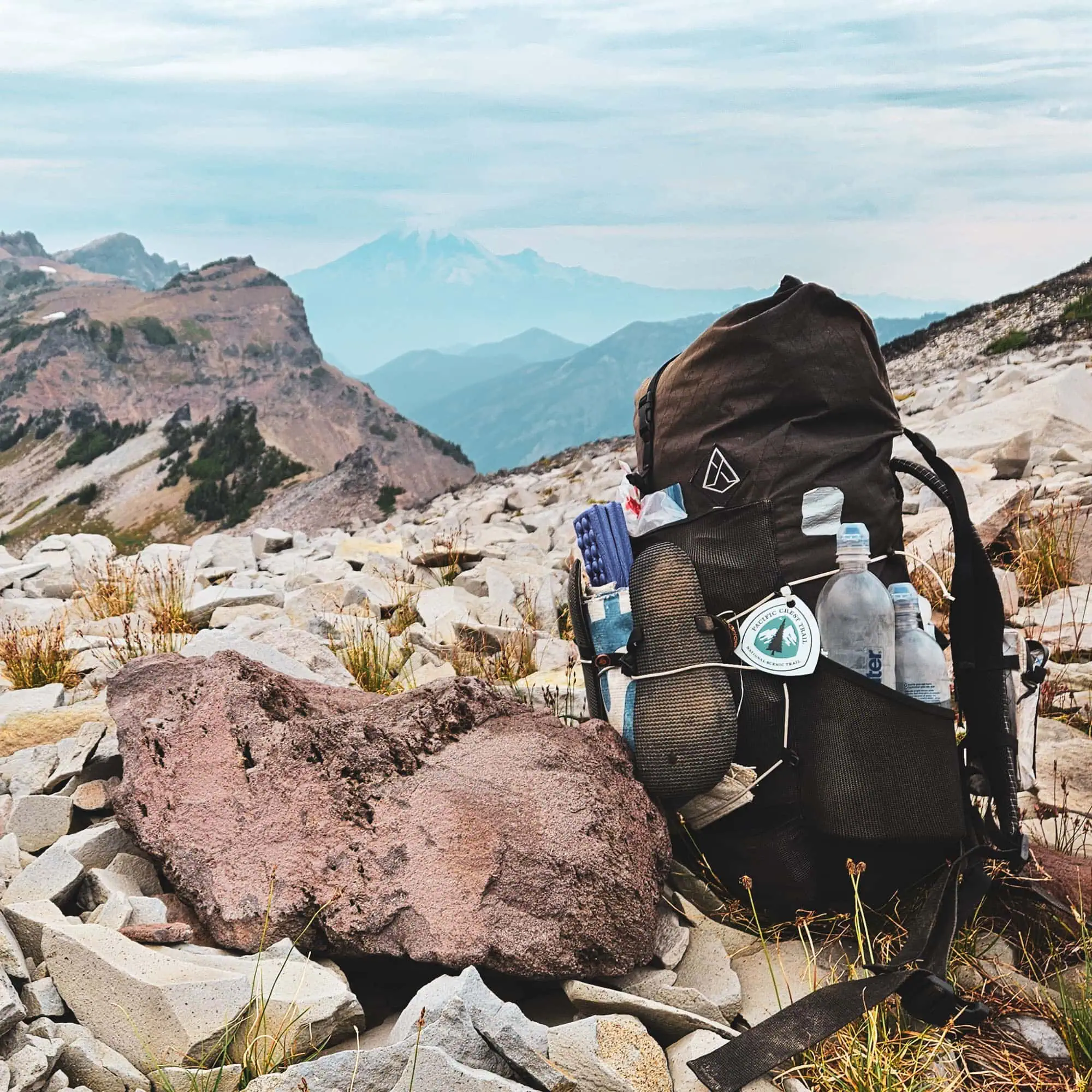
What your rucksack choice means for your base weight
This section is the reason we can write this packing list, even though we don't sell tents, sleeping bags or stoves.
Calculate with:
| Scenario | Rucksack weight | Rest-Setup (identical) | Basis weight |
|---|---|---|---|
| Classic trekking backpack | 2.10 kg | 3.633 g | 5.733 g |
| Lightweight hiking backpack | 1.2kg | 3.633 g | 4.833 g |
| WeitLäufer Agilist | 570g | 3.633 g | 4.203 g |
When developing the Agilist, that was precisely the design premise: if the rucksack itself weighs next to nothing, the rest of the kit can remain practical. You don’t have to be a die-hard SUL enthusiast who cuts their toothbrush in half. You can afford a decent sleeping mat, take a full-sized tent with you and still keep the weight under 5 kg.
Category Deep Dives: Where Manufacturer Knowledge Pays Off
Rucksack: Why frameless works from 5 kg base weight
A frameless rucksack It sounds like a compromise, but it's the more logical construction with a base weight under 5 kg. Your total weight (base weight + water + food) is then typically between 7–9 kg. In this load range, you don't need an aluminium frame that redirects the weight to your hips. The load simply isn't heavy enough to warrant a frame.
What does provide support instead: a properly packed sleeping mat to stiffen the back, and a well-designed padding system. The Agilist features extended internal padding that reaches right up to the load lifters, distributing the load evenly across the shoulders and hips even without a frame.
Shelter: Closed system beats tarp in Central Europe
Tarps are lighter. However, for 3-season trekking in Central Europe, we still recommend an enclosed shelter with a floor. The reason being, Central European weather is unpredictable. A thunderstorm in the Alps, persistent rain in the Black Forest, a mosquito infestation in Scandinavia – all of these turn a tarp into a stress factor rather than a weight advantage.
Our favourite: Pyramid tarps. They have the best storm stability, are very easy to set up with a trekking pole (and possibly a second one including an adapter), and are closed on all four sides. Some models can also be equipped with an inner tent.
The sweet spot for single-wall tents or tarp-tent hybrids is in the 500–900g range. Those who use trekking poles can save further weight on poles with trekking pole tents.
Bedding system: Quilt + good mat beats expensive sleeping bag + cheap mat
The most common beginner ultralight investing mistake: €400 for a lightweight down sleeping bag, but €40 for a thin foam mat.
The mat insulates from below (R-value), the quilt or sleeping bag from above (comfort temperature). Both must be coordinated.
A quilt (an open sleeping bag without a back and hood) saves 150–250 g compared to a mummy sleeping bag with the same filling and thermal performance. The weight advantage comes from the fact that the down under your back is compressed by body weight and doesn't insulate there. The quilt consistently eliminates this dead weight.
Cooking: The honest question: do you even need a stove?
On tours with good infrastructure (Black Forest West Trail, hut hikes in the Alps): probably not. No stove = 175g saved + no fuel logistics. Cold soaking (rehydrating food in cold water) works surprisingly well for many trekking meals.
On tours without places to stop for food (Scandinavia, remote Alpine valleys): yes, a stove is worth it. Hot food is then the morale booster of the day. In that case, a gas stove like the BRS-3000T at 25 g is the lightest system. Meths becomes interesting if you are out for longer than five days and the fuel weight catches up with the gas advantage.
Losing weight without deprivation: 8 strategies that really work
Most „saving tips“ on the internet say: „Take less with you.“ That is about as helpful as „Spend less money“ as a financial tip. Here are strategies that actually save weight without worsening your tour experience.
Weigh everything. Really everything.
A kitchen scales (available from €8) is the most important UL tool. Only when you know that your „light“ towel weighs 180 g and a microfiber cloth 40 g can you make an informed decision. Many hikers carry 1–2 kg of phantom weight around with them that they have never weighed.
Eliminate packaging.
Unpacking saves surprisingly much: toothpaste into a mini-tube, sunscreen into a 30ml bottle, first-aid kit out of its plastic box into a ziplock bag, cardboard from the toilet paper roll removed. In total, often 200–400g.
Search for multi-functionality.
Your smartphone replaces a camera, GPS, map and backup headlamp. Trekking poles carry your tent. The sleeping mat stiffens your rucksack. A Buff can be a scarf, hat, sweatband and pillow. Every item that performs two functions saves a whole item.
The have-I-ever-used-it method.
After every tour: lay out everything you haven't even used. Leave it at home next time. After three tours, your packing list will have optimised itself.
Layer clothes instead of piling them up.
Three thin layers (base layer + insulation layer + wind/rain protection) replace two thick ones. And they are more flexible because you can regulate them more granularly in changing temperatures.
Invest in the Big Four, save on the rest.
The ROI per Euro is highest for backpacks, shelters, sleeping systems, and mats. If your budget is limited: A UL backpack for €299 will save you more weight than five titanium gadgets combined.
Consciously take luxury items.
That sounds paradoxical on a savings list. But: a 30g sit pad that allows you to take a comfortable break is better-invested weight than a 200g just-in-case fleece that you never wear. UL means: you consciously choose what you allocate your weight budget to.
MYOG (Make Your Own Gear) as an entry point.
Hand-sewn stuff sacks, wind pants, or ditty bags are lighter than store-bought ones because you choose the exact size and material you need. No over-engineering, no marketing features. Getting started with MYOG costs little and saves weight on every small piece of equipment in the long run.
How to calculate basis weight: A step-by-step guide
Knowing your base weight is the first step. Tracking your base weight is the step that will keep you under 5 kg long-term.
Method 1: Lighterpack.com (free, browser-based)
Here's how to do it: Create an account (or use it without one), create an entry for each item with its name, category, and weight in grams, mark worn clothing and consumables separately. Lighterpack automatically calculates your base weight and shows you which category makes up the largest portion.
Method 2: Simple Table (Excel / Google Sheets)
If you prefer it offline or more personal: A simple table with the columns Item, Category, Weight (g) and a sum function is perfectly sufficient.
The honest scale
Regardless of the tracking method: weigh your packed rucksack completely before every hike. Without water, without food. The kitchen scales are accurate for individual items, but bathroom scales or luggage scales will give you total control. Many hikers underestimate their base weight by 500–1,000 g because they don't track „trifles“ when packing.
Frequently Asked Questions about the Ultralight Packing List
No, if the setup is right. It becomes uncomfortable if you cut corners in the wrong place. A good sleeping mat (R-value ≥ 4, sufficient width) and a warm quilt are non-negotiable. You save on weight that doesn't provide comfort: heavy packaging, double clothing, oversized stoves.
A complete setup weighing under 5 kg is realistic from around €1,200–€1,800. The largest single item is typically the shelter (€300–€500), followed by the sleep system (€250–€400) and the backpack (€250–€350). UL gear is an investment, but with good care, the components will last for many years and thousands of kilometres.
A frameless rucksack works fine with a base weight of 7–8 kg. With higher weights, transferring the load to.
Base weight = everything in the backpack without consumables. Total weight (also „skin-out weight“) = everything you are carrying, including the clothes on your body, water, food. For comparing setups, the base weight is the more honest value because consumables vary greatly depending on the trip.
Yes, with the right choice of material, even better than heavy stuff. Ultra 200X (The Agilist fabric) is an extremely high-quality, waterproof laminate designed to be saltwater-resistant and UV-stable. On the Agilist, most of the seams are fully taped, meaning the weather-protected main compartment is more watertight than most trekking rucksacks, which are merely „water-repellent“. The same applies to tents: single-wall UL tents made from DCF or silnylon can withstand storms and rain, and they do so whilst weighing half as much.
This list is designed for 3-season trekking (spring to autumn) in Central Europe. Winter trekking requires adjustments: a warmer sleep system (comfort temperature ≤ -10 °C), a more robust shelter, more insulating clothing and, depending on the terrain, snowshoes or microspikes. The base weight then typically rises to 6–8 kg. Our Winter walking guide with your own packing list can be found in the magazine.
Calculate in kilometres, not in grams. 500 g less on your back means significantly less stress on your joints on a 200 km tour. A review study by the US Army on load carriage shows that energy expenditure while walking continues to increase with every additional kilogram of luggage and that heavier loads increase the risk of injury.[4] So even the last 500 g before the 5 kg threshold make themselves felt with every kilometre.
Next step: assemble your setup
You now have a complete reference packing list with realistic weights and the strategies to get under 5 kg. The next step is to go through your own setup on Lighterpack or in a spreadsheet and find out where you stand.
If you're still looking for the right solution for the rucksack: The Agilist is our suggestion for everyone who wants to start under 5 kg base weight, without compromising on weather protection and carrying comfort. 570 g, taped seams, Ultra 200X.
And if you want to delve deeper: Our Ultralight Trekking Guide explains the basics, the Material comparison assists you with material selection, and the Westweg Guide shows you what an ultralight tour looks like in practice, right on our doorstep in the Black Forest.
Sources
- Therm-a-Rest NeoAir XLite NXT, manufacturer's specifications for weight (370 g, Regular) and R-value (4.5). cascadedesigns.com
- Schwameder et al. (1999): Knee joint forces during downhill walking with hiking poles. Journal of Sports Sciences 17(12), reduction of knee joint forces downhill by 12 to 25 per cent. pubmed.ncbi.nlm.nih.gov
- Challenge Sailcloth: Ultra Collection, technical data for the waterproof UHMWPE laminate. challengesailcloth.com
- Knapik, Reynolds, Harman (2004): Soldier load carriage: historical, physiological, biomechanical, and medical aspects. Military Medicine 169(1). pubmed.ncbi.nlm.nih.gov