Hiking in the heat is probably the most underestimated strain in the mountains, more dangerous than some thunderstorm situations because it creeps up on you. Everyone takes cold, rain and wind seriously. But 32 degrees on a shadeless south-facing slope? „Lovely weather, really.“ It is precisely this casual attitude that gets people into trouble every summer, ranging from circulatory collapse to mountain rescue.
I’ve been heading into the mountains in all weathers for over ten years, from the Black Forest on my doorstep to long crossings of the Alps in the height of summer. Here at WeitLäufer, we make rucksacks, which is precisely why the topic of heat interests me so much: No other factor has such a direct impact on how much you carry, how much you sweat, and whether the hike turns into a pleasure or a torment. What happens inside your body, how you plan, stay hydrated and dress, and how you recognise the moment when you have to call it a day.
What happens in your body when it's hot
Your body has only one effective cooling mechanism: sweating. When the sweat evaporates on the skin, it extracts heat, which is evaporative cooling, and it works remarkably well as long as enough fluid is replenished. In extreme heat and with exertion, you can lose up to a litre of sweat per hour this way.[1] Along with the water, salts are also lost, primarily sodium, and it is precisely this combination of fluid and electrolyte deficiency that is the real problem.
If the gap becomes too wide, the circulatory system switches to emergency mode. The blood pools in the periphery, the brain receives too little, and the person begins to faint. It is important to keep the three stages separate, as they carry different levels of danger and require different responses.
| State | Quick check | Symptoms and what to do |
|---|---|---|
| Heat exhaustion | damp and cool | Pale, clammy, rather cool skin, dizziness, headache, nausea, weakness with usually normal body temperature. Result of not drinking enough. Serious, but easily manageable in the shade with fluids. |
| Heatstroke | hot and dry | Hot, often dry skin, flushed face, body temperature over 40 degrees, confusion, rapid pulse, possibly unconsciousness. Life-threatening emergency, call 999 immediately. |
| sunstroke | only the head is hot | Bright red, hot head with otherwise normal body, neck stiffness, headache, nausea. Result of direct sun on the unprotected head, often only showing hours later. |
How to tell the two apart: With heat exhaustion you are still sweating and your skin is damp. With heatstroke the body's cooling system has broken down, the skin becomes hot and dry, and the head turns bright red. This isn't a case of just „sitting down for a moment“, this is a 999 emergency. More on that below.
You win hot days during the planning stage
Most heat-related problems already arise at the kitchen table during planning. Anyone who adapts the tour to the heat will need significantly less discipline on the way. Four adjustments matter.
Start early
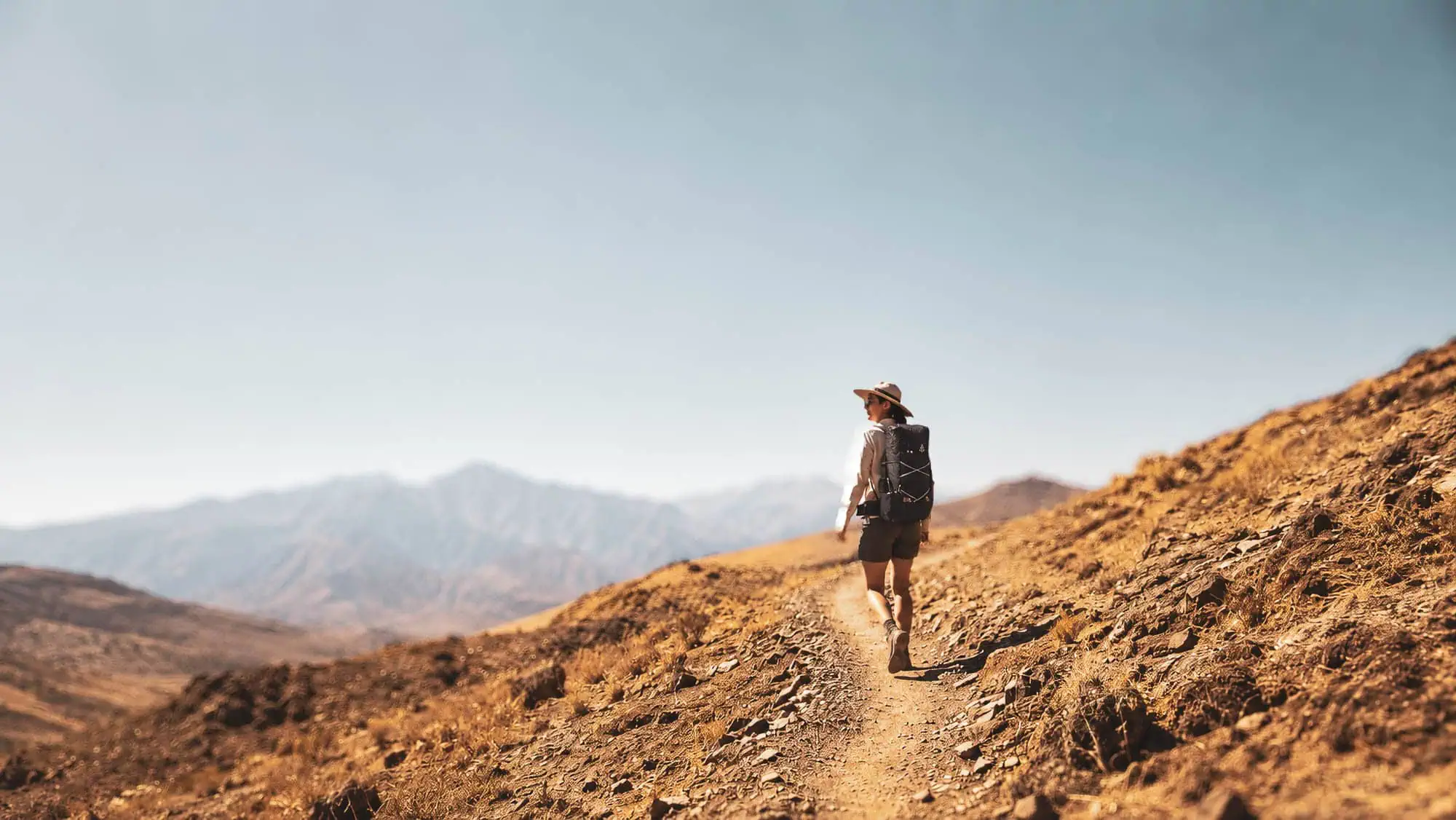
The most effective measure costs nothing: set off early. The hours between six and ten o'clock are still cool from the night, and you get the most strenuous part, usually the ascent, out of the way before the sun really beats down. Rule of thumb: you want the hard graft done by 2 pm, because that is when the heat reaches its peak, often combined with the risk of afternoon storms. Starting early also means that an unplanned delay won't push you into the hottest phase of the day.
Shadow and route
A forest path is worth its weight in gold in the heat. Under trees it is noticeably cooler, the ground does not heat up, and you are out of the direct radiation. That is precisely why low mountain ranges like the Black Forest are often more pleasant in high summer than a bare Alpine ridge. If you can plan ahead, schedule the ascent on north- or west-facing slopes, which are in the shade in the morning. Tours along streams or lakes give you opportunities to cool down along the way. On the West Way in the Black Forest On hot days, I purposely walk the wooded stages and save the exposed ridges for the morning.

Altitude and season
Altitude cools. For every 100 metres of elevation gain, it gets on average about 0.6 degrees cooler; 34 degrees in the valley can already be a pleasant 23 at 1,800 metres.[2] During a heatwave, it is therefore worth planning for higher altitudes rather than stewing in the valley basin. And sometimes the most honest decision is not to visit a region at all in the wrong season. The GR221 in Mallorca did that in April, and even then it was already too hot in places. In July or August, such a stone desert is simply not a good idea, so I would rather postpone the tour to a cooler month, if in doubt until winter half-year.
Drinking and electrolytes: more than just water
Drinking is a lifeline when hiking in the heat, and almost everyone gets it the wrong way round. The amount is usually right, but the timing is off: if you feel thirsty, you've actually waited too long, because thirst is already an alarm signal from the body. Therefore, drink small amounts regularly, a few sips every 20 to 30 minutes or so, rather than a lot at once infrequently.
As a rough rule of thumb, I reckon on 2.5 to 3 litres on a hot day of hiking, and even more on long ascents in the blazing sun. But water alone isn't enough. You lose sodium with your sweat, and anyone who just keeps downing litres of plain water further dilutes their salt levels. The consequences are cramps, headaches, a drop in performance, and in extreme cases, a dangerous deficiency in sodium. That's why electrolytes are a must: via an electrolyte tablet in your water, a diluted fruit juice, or quite simply through something savoury to eat. It's no coincidence that salted pretzels and cheese have established themselves as hiking snacks.

Clothing and sun protection in hot weather
When it comes to clothing during a heatwave, many people make the instinctive mistake of stripping off as much as possible. However, bare skin in the blazing sun is the exact opposite of protection. Airy coverage makes more sense: light, loose and breathable fabrics that wick sweat away from the skin and block out radiation. Light colours heat up less than dark ones because they reflect sunlight instead of absorbing it.
My personal favourite sounds counterintuitive at first: a thin long-sleeved shirt made of merino wool, even in the height of summer. Merino regulates temperature better than you would think, cools through evaporation, protects your arms from the sun and hardly starts to smell even after days. Synthetic technical shirts dry quicker, but start to stink sooner. Both work, whereas cotton gets soaked and stays wet, so you'd better leave that at home when it's hot.
However, the most important item of clothing in hot weather is the one you wear on your head: without headwear, you risk getting sunstroke in summer. A wide-brimmed hat that also shades the back of the neck, ears and face is ideal. I use a peaked cap to which I've added a neck flap using press studs, because the back of the neck is the part that is most directly exposed to the sun when walking uphill.
Sun protection remains for the skin that is exposed. Honestly, I'm not a fan of sun cream, I don't like the feeling on the skin, and I avoid it as much as possible using textiles like long sleeves and a hat. But that's my personal quirk, not advice. For everything that remains exposed, face, hands, ears, back of the neck, sun cream with a high sun protection factor belongs in the rucksack and should be applied before the hike, not just when it's already burning. Add to that sunglasses, as at altitude the UV exposure is even higher.
The rucksack in the heat: where weight becomes cooling
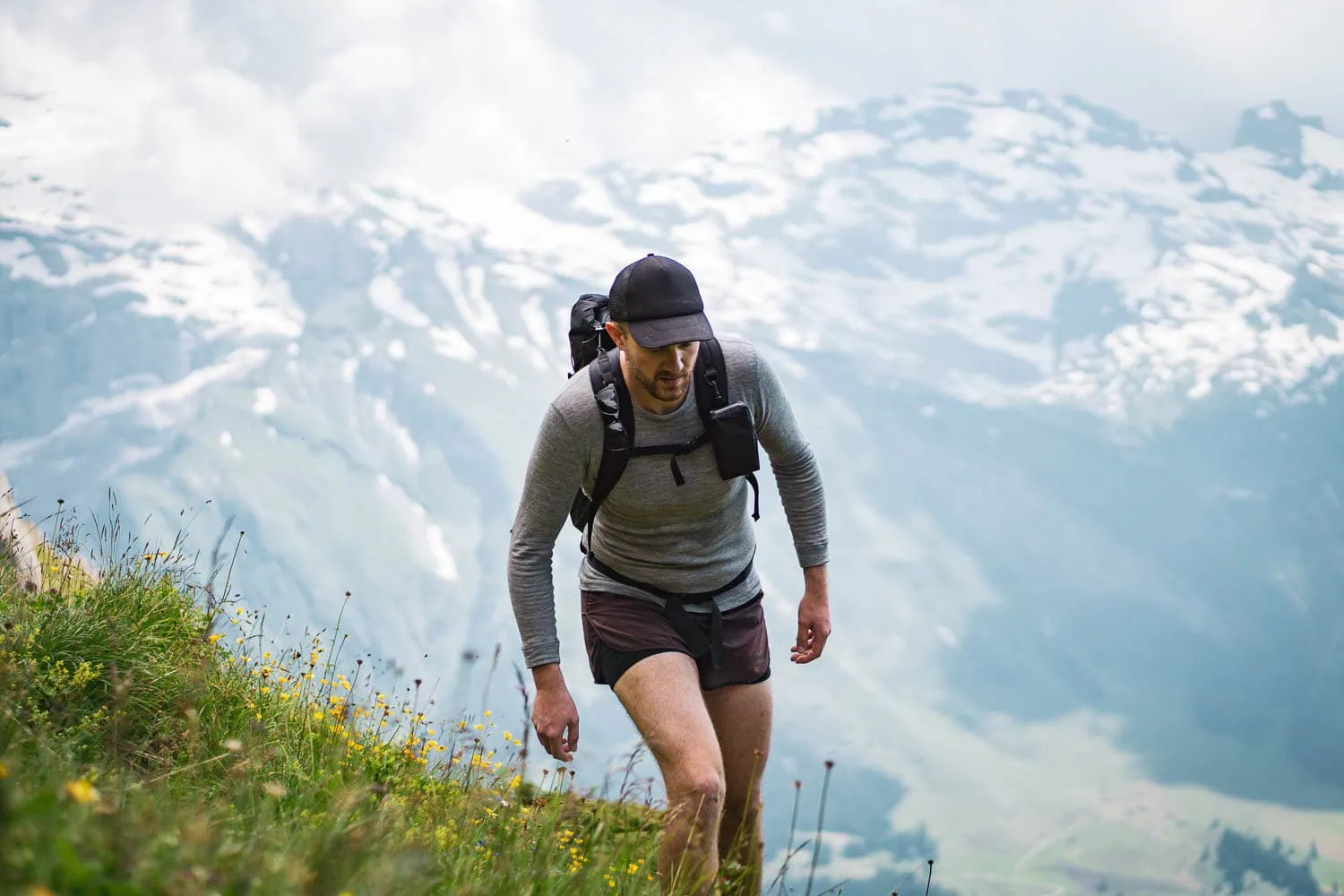
This is where the manufacturer's perspective comes into play, and it is more uncomfortable than a backpack maker usually admits. The back is the place where you sweat the most when hiking, because that is where the backpack rests and traps the heat. Heavy trekking backpacks try to solve this with a trampoline mesh back system that keeps the pack away from the back so that air can circulate. That works, but it requires structural design, and that adds weight.
A lightweight, frameless backpack, on the other hand, sits closer to your back, which tends to trap more heat. That is the honest trade-off, and I am not hiding it. However, a more important calculation comes into play here: the biggest lever against heat is total weight, and ventilation only comes after that. Every kilo that you carry produces metabolic heat. Less exertion means less body heat, and thus less sweat and less water that you have to lug around in the first place.
If you want to delve deeper into what a lightweight setup looks like in detail, you can find that in the Guide to Ultralight Rucksacks. For the heat tour, what matters most is: pack lighter, wear brighter, and take the rucksack off your back briefly during breaks so that your shirt can dry a little.
Heatstroke and heat exhaustion: recognition and proper response
Even with good planning, things can turn sour due to a sudden change in the weather, a delay, or a bad day. What matters then is that you take the signs seriously early on, both in yourself and in the others in the group. The German Alpine Club (DAV) puts it into a simple order: take breaks, shorten the tour, walk in the shade, and, if in doubt, turn back.[3] An abandoned tour is a sensible decision.
Is anyone showing signs of Heat exhaustion, pale damp skin, dizziness, headache, get out of the sun immediately, sit or lie down with legs slightly elevated, and drink electrolyte-containing fluids, i.e. mineral water, diluted fruit juice or salted water. Damp, cool cloths on the back of the neck, forehead and wrists. The circulation usually recovers with this.
On suspicion of Heatstroke for this, hot dry skin, a flushed face, confusion or clouded consciousness, the following applies: immediate emergency call 112 (in Switzerland 144). This is a life-threatening emergency. Until help arrives: shade, upper body slightly raised, loosen clothing and actively cool the body, with water, damp cloths, on the head, neck, armpits and groin.[4] Put an unconscious person who is breathing normally into the recovery position.
Get up before six, get the hard graft done by two.
The midday heat is non-negotiable. Anyone who is up early has the hardest part behind them in the cool phase and has a buffer for breaks and weather.
Drink in small sips before thirst sets in.
A few sips every 20 to 30 minutes, 2.5 to 3 litres a day as a guide. When thirst strikes, you're already cutting it fine.
Don't forget your electrolytes.
Plain water alone dilutes the salt balance. An electrolyte tablet in the water keeps cramps and headaches at bay.
Bright, airy, long-sleeved, and covering the head.
Light, breathable fabrics keep you cooler than bare skin. A wide-brimmed hat or a cap with neck protection protects against sunstroke.
Factor shade and water into the route.
Forest trails, north-facing slopes, streams and lakes are the route's air conditioning, plan them in actively. Planning higher means walking cooler.
When in doubt, turn around.
Dizziness, nausea, a flushed face in yourself or the group: take a break, cool down, stop. In the case of hot, dry skin and confusion, call the emergency services on 112 immediately.
Hot summer days are part and parcel of hiking. With an early start, plenty of fluids and a light rucksack, they can be managed. And if the forecast says 36 degrees in the valley: the mountains will still be there next week.
Frequently asked questions about hiking in hot weather
There is no fixed limit, but particular caution is advised from about 30 degrees and on exposed, shadeless routes. The temperature alone does not tell you much. Dangerous is the combination of sun, humidity, exertion and lack of shade. During a heatwave, it is better to shorten tours, move them higher up or into the forest, or postpone them altogether.
On a hot day of hiking, 2.5 to 3 litres is a good guideline, or even more during long ascents in the blazing sun. More important than the volume is the timing: regular small sips every 20 to 30 minutes, even before thirst sets in. You can supplement plain water with electrolytes, most easily by eating something salty.
Light-coloured, loose and breathable clothing that wicks away sweat and keeps the sun off. A thin long-sleeved shirt made from merino wool or synthetics protects the arms better than bare skin. Cotton stays wet and is unsuitable. In addition, headwear with a wide brim or neck flap and sunglasses are an absolute must.
In heat exhaustion the skin is pale, damp and rather cool, you are still sweating, and your circulation is weakened due to a lack of fluids. In heatstroke, the cooling system has broken down: the skin becomes hot and dry, the head is flushed bright red, accompanied by confusion and a body temperature above 40 degrees. Heatstroke is a life-threatening emergency.
Call emergency services on 112 immediately, or 144 in Switzerland. Until help arrives, move the person into the shade, prop up their upper body slightly, loosen tight clothing and actively cool their body using water and damp cloths on the head, neck, armpits and groin. An unconscious person who is breathing normally should be placed in the recovery position.
Yes, significantly. Under trees it is noticeably cooler, the ground does not heat up, and you are out of the direct sun. Wooded low mountain ranges like the Black Forest are often more pleasant in high summer than barren high mountain ridges. Shady north-facing slopes and tours along streams enhance the effect even further.
Sources
- Techniker Krankenkasse, drinking during sport: 0.5 to 1 litre of fluid lost through sweat per hour during physical exertion in recreational sport, along with a loss of sodium and other minerals. tk.de
- WetterKontor, Weather Lexicon: The air temperature decreases on average by 0.6 degrees Celsius per 100 metres of altitude. wetterkontor.de
- German Alpine Club, hiking in hot weather: recommendations for an early start, breaks, shady routes and calling off tours. alpenverein.de
- Malteser, first aid for summer heat: heatstroke with a body temperature over 40 degrees as a life-threatening emergency, emergency call 112, active cooling of the body. malteser.de