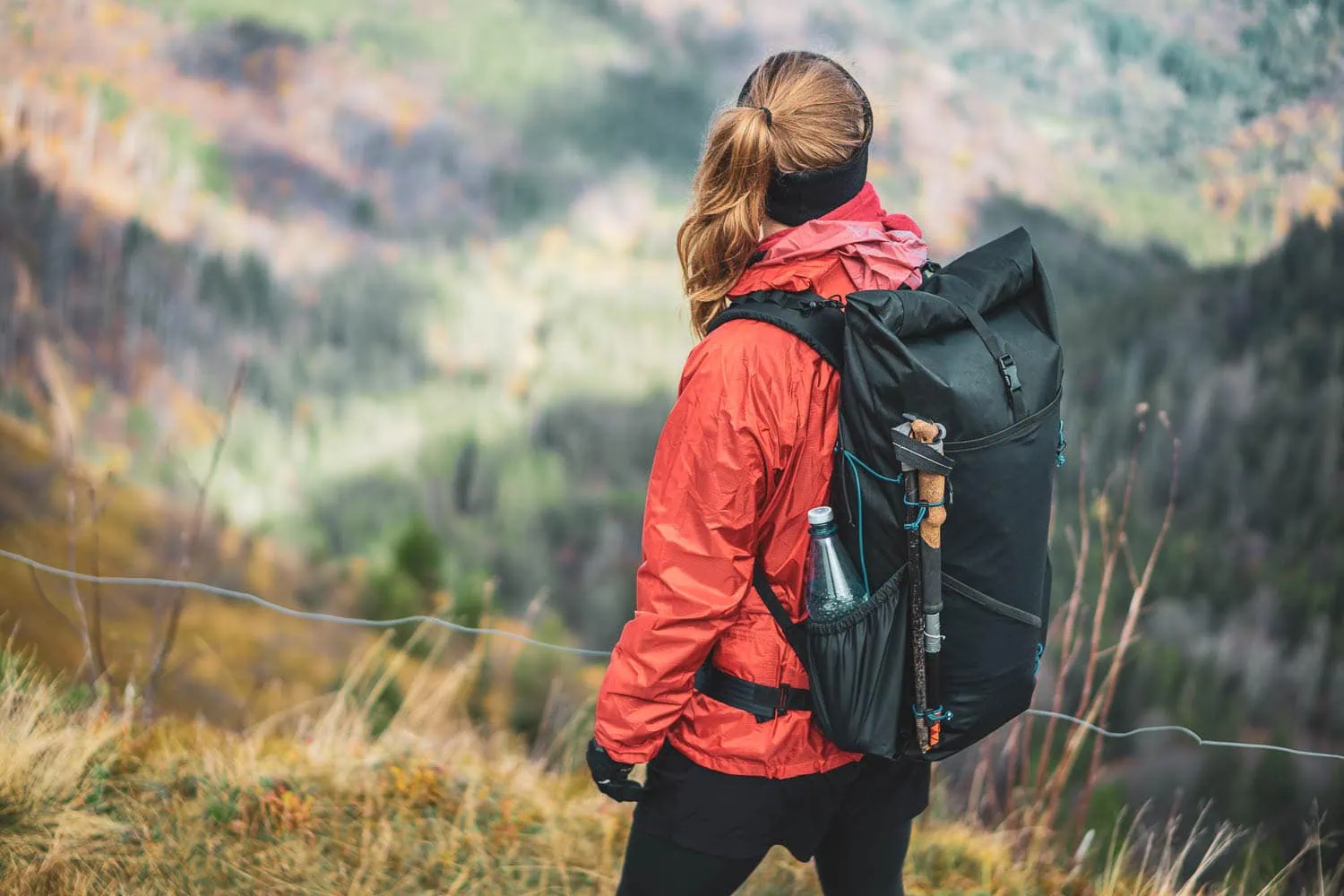
What gear to take on a hike is a question that arises anew before every trip. For multi-day tours, conscious planning in advance is worthwhile. Otherwise, the rucksack will be packed with unnecessary items, often just to fill the empty space. But a lighter rucksack is not only kinder to your shoulders, it makes the whole hike more restful.
This article contains a detailed and uncluttered hiking gear packing list for you to print, tick off and – if you like – to enter your own weights. The list can also Download as PDF.
Outdoor Gear at a Glance
The packing list is sorted by category: Clothing, Hygiene and First Aid, Other Equipment, Food, and an extra section for hut tours. As compiled, this is Base weight without provisions from 3 to 5 kilograms easily accessible. With this weight, hiking is considerably more enjoyable, especially on multi-day tours, than with backpacks weighing well over 10 kg.
The hiking equipment in this list covers classic three-season tours, from day hikes in low mountain ranges to multi-day hut-to-hut hikes in the Alps. What is not covered is winter and high-alpine touring equipment with crampons, ice axes, and avalanche gear, that's a separate chapter.
Base weight, carrying weight and gross weight
When the text above mentions 3 to 5 kilograms, it refers to your Basis weight: everything in and on the rucksack, excluding consumables such as water, food and gas. If you add in a full ration and a supply of water, you end up with Load capacity, that is, what is actually resting on one’s shoulders. That Total weight In the end, add what you are wearing on your body (shoes, trousers, shirt). For planning, the base weight is the most important, as that's the only thing you can really adjust. Water and food depend on the tour, your equipment depends on you.
Most of the weight comes from just a few large items: a rucksack, a sleeping bag (or a hut sleeping bag), a sleeping mat and, if you’re camping, your tent. Choosing wisely here saves you more weight than cutting out ten small items. On my first long-distance trip, from Munich to Venice, I lugged around a 2.5-kilo rucksack, which I’ve now swapped for a model weighing under 500 grams. You can easily shave off three to four kilos from these larger items alone, without having to go without anything. You can find out exactly how much the sleeping mat contributes to the weight and what matters when it comes to the R-value in our Buying guide for ultralight sleeping mats.
Clothing and a change of clothes
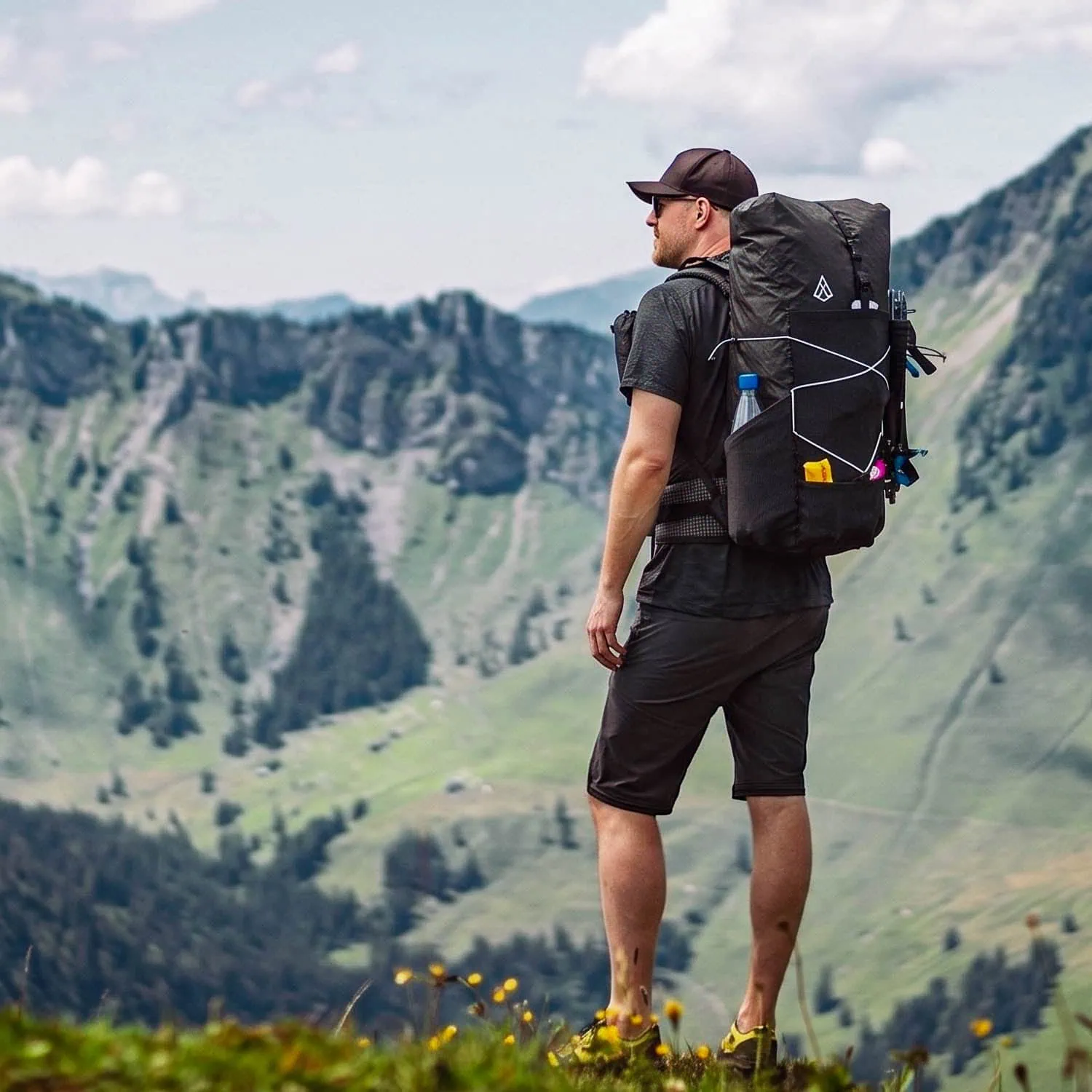
When it comes to clothing, the layering principle beats any single thick jacket: several thin layers, which you can combine depending on the weather, keep you warmer and offer more flexibility. Leave your cotton clothes at home – they soak up water and take ages to dry. Everything on the list is suitable for three seasons; in the height of summer, you can even leave out your insulated jacket and gloves, depending on the region.
| Item | Number | Note |
|---|---|---|
| Hiking boots | 1 | Adapted for the tour |
| Hiking socks | 2 to 3 | A pair worn on the body |
| Lightweight, zip-off hiking trousers | 1 | Worn on the body |
| Functional T-shirt | 2 | A piece worn on the body |
| Performance long-sleeved shirt or hiking shirt | 1 | Worn on the body |
| Underwear | 3 | A piece worn on the body |
| Leggings made from technical fabric | 1 | |
| Fleece jacket or jumper | 1 | |
| Insulation jacket | 1 | Down or synthetic fibre |
| Hardshell jacket | 1 | Waterproof |
| Rain trousers | 1 | |
| Lightweight fleece hat | 1 | |
| Gloves | 1 | |
| Cap, hat or headwear | 1 |
Hygiene and first-aid kit
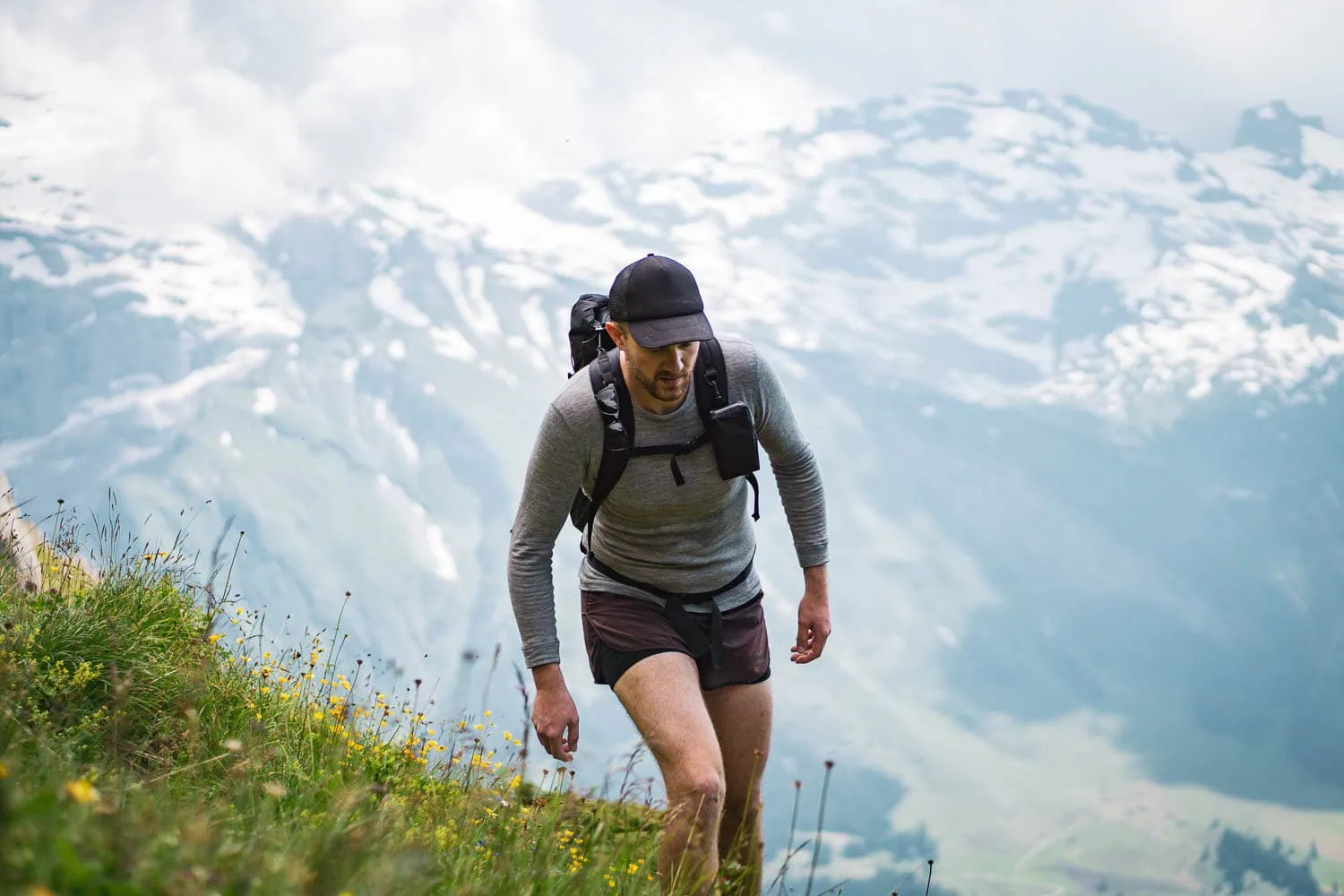
Your first-aid kit can be small, but it must cover the most common hiking ailments: blisters, minor cuts and grazes, and headaches. One thing that many people underestimate is ticks. In large parts of southern and central Germany (the Robert Koch Institute now identifies 185 TBE risk areas[1]) include tick tweezers and an evening check – these are essential. Wearing long, light-coloured clothing makes the ticks visible and makes it harder for them to reach the skin.
| Item | Number | Note |
|---|---|---|
| Toilet paper | 1 | A few leaves are enough |
| Sun protection | 1 | |
| Bandages and plasters | 1 | |
| Compeed blister plasters | 1 | |
| Painkillers | 2 to 4 | For example, Ibuprofen 400 |
| Tick remover | 1 | |
| Wound disinfection | 1 | |
| Tiny sewing kit | 1 | For small repairs |
Other hiking equipment
| Item | Number | Note |
|---|---|---|
| Lightweight hiking backpack | 1 | 25 to 35 litres for day trips, more for multi-day tours |
| Rucksack liner | 1 | More reliable than a rain cover |
| Plastic water bottles | 2 | I have 1 to 1.5 litres |
| Compass | 1 | |
| Map material | 1 | Paper or offline on the smartphone |
| Tour guide | 1 | Printed or offline on the smartphone |
| Sunglasses | 1 | |
| Trekking poles | 1 pair | |
| Smartphone | 1 | |
| Cushion | 1 | |
| Emergency bivouac bag | 1 | For mountain and alpine tours, there is also a 2-person version. |
| Camera | 1 | Optional |
| Folding or pocket knives | 1 | Optional |
Additionally for hut tours or overnight stays
| Item | Number | Note |
|---|---|---|
| Sleeping bag liner | 1 | |
| Alpenverein pass | 1 | |
| Microfibre towel | 1 | Small and light |
| Liquid soap | 1 | For example, Dr. Bronner's, very economical |
| Toothbrush | 1 | |
| Toothpaste or DentTabs | 1 | Mini-pack is enough |
| Oropax | 1 | Of particular importance in sleeping arrangements |
| Headlamp | 1 | |
| Slippers | 1 | Optional, available in most mountain huts |
Catering
What snacks and trekking food belong in your rucksack depends heavily on the type and length of the tour. This basic selection works on most tours:
| Food | Note |
|---|---|
| Nüsse | Paranüsse, Cashewkerne, Haselnüsse, Walnüsse |
| Trockenobst | Datteln, Feigen, Bananenchips, Rosinen, Aprikosen, Mango |
| Energieriegel | Auf gute Zusammensetzung achten |
| Studentenfutter | Eine ausgewogene Mischung aus Nüssen und Trockenobst |
| Brotzeit | Bei Tagestouren |
Wasser richtig einplanen
Wasser ist der schwerste Posten, den du selbst in der Hand hast: ein Liter wiegt ein Kilo. Genau deshalb lohnt es sich, die Menge nicht nach Gefühl, sondern von Quelle zu Quelle zu planen. Als Faustregel brauchst du beim Wandern rund einen halben bis einen Liter pro Stunde, an steilen oder sonnigen Abschnitten schnell mehr[2]. Statt den kompletten Tagesbedarf über den ersten Pass zu schleppen, fülle ich an Hütten, Brunnen oder verlässlichen Bächen nach. Wo das Wasser aus dem Bach kommt, nimmt mir ein leichter Filter die Unsicherheit.
Im Hochsommer ändert sich diese Rechnung deutlich, dann wird Wasser wichtiger als jedes eingesparte Gramm[3]. Wie du Route, Kleidung und Pausen an große Hitze anpasst, haben wir im Ratgeber Wandern bei Hitze ausführlich zusammengeschrieben.
Was du getrost zu Hause lässt
Eine gute Packliste ist so viel wert wie das, was nicht draufsteht. Diese Dinge landen am häufigsten unnötig im Rucksack:
- Zu viel Wechselwäsche. Drei Garnituren für eine Wochentour braucht niemand. Mit Merino kommst du mit einem Wechsel und gelegentlichem Auswaschen locker aus (siehe Tipp 03).
- Der zweite „falls doch“-Pulli. Isolationsjacke plus Fleece reichen für drei Jahreszeiten. Die Reserve zur Reserve bleibt zu Hause.
- Große Hygiene-Flaschen. Duschgel, Shampoo und Zahnpasta in Reisegröße oder umgefüllt. Eine ergiebige Flüssigseife ersetzt gleich mehrere Produkte.
- Das dicke Buch und der komplette Reiseführer. Vom Wanderführer reichen oft die relevanten Seiten, den Rest trägst du digital.
- „Kann man immer gebrauchen“-Gadgets. Multitool mit 20 Funktionen, Klapphocker, überdimensionierte Powerbank für drei Tage. Ehrlich prüfen, ob du es auf der letzten Tour wirklich benutzt hast.
- Doppelte Elektronik. Das Smartphone ersetzt Kamera, Taschenlampe und den digitalen Wanderführer in einem. Karte und Kompass in Papierform sind die bewusste Ausnahme, sie funktionieren auch mit leerem Akku.
Der ehrlichste Test kommt nach der Tour: Leg alles beiseite, was du unterwegs kein einziges Mal in der Hand hattest. Beim nächsten Mal bleibt es liegen.
Tipps zum Packen der Wanderausrüstung
Hier findest du neun Tipps, wie du deinen Wanderrucksack leicht und sinnvoll packst:
Maximales Rucksackgewicht beachten
Ein leichter Wanderrucksack wiegt idealerweise nicht mehr als 10 Prozent deines Körpergewichts und generell unter 8 Kilogramm. Aber gilt: je weniger, desto besser.
Rucksack erst zum Schluss aussuchen
Wähle den Rucksack erst aus, wenn der Rest der Wanderausrüstung feststeht. Erst dann weißt du, welches Volumen wirklich nötig ist.
Wechselwäsche reduzieren
Wanderbekleidung aus Merinowolle nimmt auch nach vielen Tagen kaum Gerüche an, wärmt im feuchten Zustand noch gut und trocknet schnell. Damit muss weniger Ersatzwäsche in den Rucksack.
Wasservorräte sinnvoll planen
Plane die Wassermengen immer von einer Trinkwasserquelle, einem Gasthof oder einer Hütte zur nächsten. So lässt sich viel Gewicht einsparen.
Nicht auf den letzten Drücker packen
Sonst landen Dinge im Rucksack, die nicht unbedingt dahin gehören. Eine ruhige Vorbereitung am Vorabend spart Gewicht.
ZipLoc-Beutel zur Organisation nutzen
Leichte und wasserdichte ZipLoc-Beutel eignen sich hervorragend für die Organisation kleiner Ausrüstungsgegenstände. Ein Farbsystem (verschiedene Beutel für verschiedene Kategorien) spart unterwegs Zeit.
Rucksackliner statt Regenhülle
Ein innenliegender Rucksackliner schützt deine Wanderausrüstung deutlich besser gegen Regen als eine äußere Regenhülle. Über den Rückenbereich des Rucksacks dringt nach längerer Zeit sonst Wasser ins Innere.
Kleidung rollen statt falten
So sparst du Volumen im Rucksack und es entstehen weniger Knickstellen, die später Druckstellen verursachen können.
Nach Gebrauchszeitpunkt packen
Verstaue die Ausrüstung so im Rucksack, wie du sie unterwegs brauchst. Dinge, auf die du häufig zugreifen musst (Snacks, Karte, Regenjacke), gehören weiter oben in leicht erreichbare Taschen.
Frequently Asked Questions
Welche Wanderausrüstung optimal ist, hängt von Länge, Gelände und Wetterbedingungen der Tour ab. Im UL-Trekking gilt das Prinzip „Weniger ist mehr“. Dazu gehören ein leichter Rucksack, atmungsaktive Kleidung, gut sitzende Schuhe, ausreichend Verpflegung und Wasser sowie ein Erste-Hilfe-Set und Regenbekleidung. Auch im Sommer. Der Rucksack, zum Beispiel der Agilist or Endurist, sollte ultraleicht sein, aber dennoch genug Volumen für die wichtigsten Gegenstände bieten.
Leichte und funktionelle Kleidung schützt dich vor den Elementen und transportiert gleichzeitig Schweiß ab. Besonders wichtig sind atmungsaktive und schnell trocknende Materialien. Verpflegung und Wasser sollten minimalistisch und auf die Tour abgestimmt sein, mit Fokus auf dehydrierte Nahrung oder energiereiche Snacks wie Nüsse oder Schokolade. Bei der Wanderausrüstung gilt: Effizienz, Funktionalität und Leichtigkeit, um die Belastung zu minimieren und das Erlebnis zu maximieren.
Die richtige Wanderausrüstung macht das Wandern angenehmer und sicherer. Eine gut gewählte, ultraleichte Ausrüstung reduziert das Gewicht, das du tragen musst, und verringert damit die Belastung für deinen Körper. Du kannst längere Strecken zurücklegen, ohne so schnell zu ermüden.
Es geht aber nicht nur um Komfort. Die richtige Ausrüstung schützt auch vor den Elementen und unvorhergesehenen Situationen. Leichte, wasserabweisende Jacken oder Zelte schützen vor Regen, atmungsaktive Kleidung hält dich bei Hitze kühl. Sicherheit und Komfort sind die wichtigsten Gründe, warum eine durchdachte Wanderausrüstung sich auszahlt.
Verteile das Gewicht gleichmäßig im Rucksack. Schwere Gegenstände gehören nahe an den Rücken, um die Last zentral zu halten und den Schwerpunkt zu stabilisieren. Leichtere Gegenstände kannst du weiter oben und außen verstauen. Nutze jede Tasche sinnvoll, indem du Gegenstände, die du unterwegs brauchst (Snacks, Regenjacke, Karte), leicht zugänglich machst.
Minimalistische Packtechniken wie Packbeutel oder das Komprimieren von Kleidung sparen Platz und verhindern, dass der Rucksack unausgewogen wird. So bleibt der Schwerpunkt niedrig und der Tragekomfort hoch.
Als Faustregel sollte das gepackte Gesamtgewicht nicht mehr als etwa 10 bis 20 Prozent deines Körpergewichts betragen, im Ultraleicht-Trekking eher darunter. Wichtiger als die Prozentregel ist aber dein Basis weight, also alles ohne Wasser und Verpflegung. Mit durchdachter Ausrüstung sind hier 3 bis 5 Kilogramm gut erreichbar.
Das meiste Gewicht steckt in wenigen großen Teilen: Rucksack, Schlafsack, Isomatte und Unterkunft. Wer dort leicht wählt, trägt auf der ganzen Tour spürbar weniger, ohne auf Sicherheit oder Komfort zu verzichten.
Der richtige Rucksack sollte leicht, funktional und auf die Anforderungen deiner Tour abgestimmt sein. Ein Ultraleicht-Rucksack wie der Agilist bietet zahlreiche Vorteile, wenn du eine minimalistische Ausrüstung bevorzugst und lange Strecken zurücklegen möchtest.
Ein entscheidender Faktor ist das Volumen des Rucksacks, das sich nach der Länge und Art deiner Tour richtet. Für eine Drei-Jahreszeiten-Trekkingtour mit ultraleichter Ausrüstung und Resupply alle 3 bis 5 Tage ist ein Rucksack mit 35 bis 50 Litern Volumen ideal. Der Agilist bietet 54 Liter Gesamtvolumen und ist somit gut für längere Touren und mehrtägige Wanderungen geeignet.
The Gewicht des Rucksacks selbst ist ebenfalls wichtig. Ultraleichte Rucksäcke verzichten auf unnötige Features wie schwere Tragegestelle und überdimensionierte Polsterungen, um das Eigengewicht zu minimieren. Der Agilist 2026 wiegt etwa 570 Gramm und ist damit ein guter Begleiter für anspruchsvolle Touren.
Auch die Fit ist ein Kriterium. Achte darauf, dass der Rucksack gut an deinen Körper angepasst ist. Der Agilist bietet Unisex-Schultergurte und Load-Lifter, die helfen, die Trageposition zu optimieren. Auch die Rückenlänge sollte stimmen, WeitLäufer-Rucksäcke sind in verschiedenen Rückenlängen erhältlich.
Die Wahl des Materials spielt ebenfalls eine Rolle. Ultraleichte Rucksäcke bestehen aus robusten und gleichzeitig leichten Materialien wie Ultra 200X oder X-Pac. Diese Laminate bieten hohe Abriebfestigkeit und sind wetterfest, sodass sie auch bei rauen Bedingungen zuverlässig schützen. Im Agilist 2026 kommt Ultra 200X zum Einsatz, dessen UHMWPE-Faser gewichtsbezogen 15-mal reißfester ist als Stahl.
Ultraleichte Wanderausrüstung reduziert das Gesamtgewicht, das du während einer Wanderung tragen musst. Das macht dich weniger schnell müde und verbessert das Wandererlebnis. Leichtere Ausrüstung bedeutet weniger Belastung für Schultern, Knie und Rücken. Du kannst längere Strecken zurücklegen und deine Energie effizienter einsetzen.
Dazu kommt der minimalistische Ansatz: du konzentrierst dich auf das Wesentliche und lässt unnötige Gegenstände weg. Der Vorteil liegt nicht nur in der körperlichen Entlastung, sondern auch in einem bewussteren und genussvolleren Wandererlebnis.
Reinige deinen Rucksack nach jeder längeren Tour gründlich, indem du ihn ausschüttelst und bei Bedarf per Hand wäschst. Verwende milde Reinigungsmittel and vermeide die Maschinenwäsche, um die Materialien zu schonen. Trockne die Ausrüstung nach dem Waschen vollständig, bevor du sie lagerst, sonst droht Schimmelbildung. Auch Schuhe und Kleidung profitieren von regelmäßiger Reinigung und neuer Imprägnierung, um die wasserabweisenden Eigenschaften zu erhalten. Mit der richtigen Pflege bleibt deine Wanderausrüstung über Jahre langlebig und funktionstüchtig.
Weiterführende Artikel zur Wanderausrüstung
Im WeitLäufer Magazin gehen wir bei einzelnen Themen tiefer in die Details, etwa in der Kaufberatung zur ultraleichten Isomatte oder im Ratgeber zum Wandern bei Hitze.
Auf BergReif findest du außerdem viele weiterführende Ratgeber zu einzelnen Ausrüstungsteilen, immer unter dem Aspekt der Ultraleicht-Philosophie, aber auch mit Alternativen aus dem klassischen Trekking-Segment:
- Wanderschuhe Test, 15 Modelle auch fürs Ultraleicht-Wandern
- Ultraleicht-Schlafsack Test, 12 Modelle von 340 g bis 1.500 g
- Ultraleicht-Isomatten Test, 17 Modelle von 175 g bis 550 g
- Ultraleicht-Zelt Vergleich, 12 federleichte Modelle für 1 oder 2 Personen
- Ultraleicht-Daunenjacke, 15 Isolationsjacken ab 145 g
- Wanderstöcke Test, Falt- gegen Teleskop, Carbon gegen Aluminium
- Stirnlampen Test, von der UL-Kopfleuchte bis zur Hochleistungs-Stirnlampe
- Biwaksack Test, eine Alternative zum 1-Personen-Zelt
Sources
- Robert Koch-Institut, FSME-Risikogebiete in Deutschland (185 Kreise, Stand 2026). rki.de
- Deutscher Alpenverein, Bergsport und Ernährung (Flüssigkeitsbedarf beim Wandern). alpenverein.de
- Deutscher Alpenverein, Wandern bei Hitze (Wasserbedarf und Verhalten bei großer Hitze). alpenverein.de