
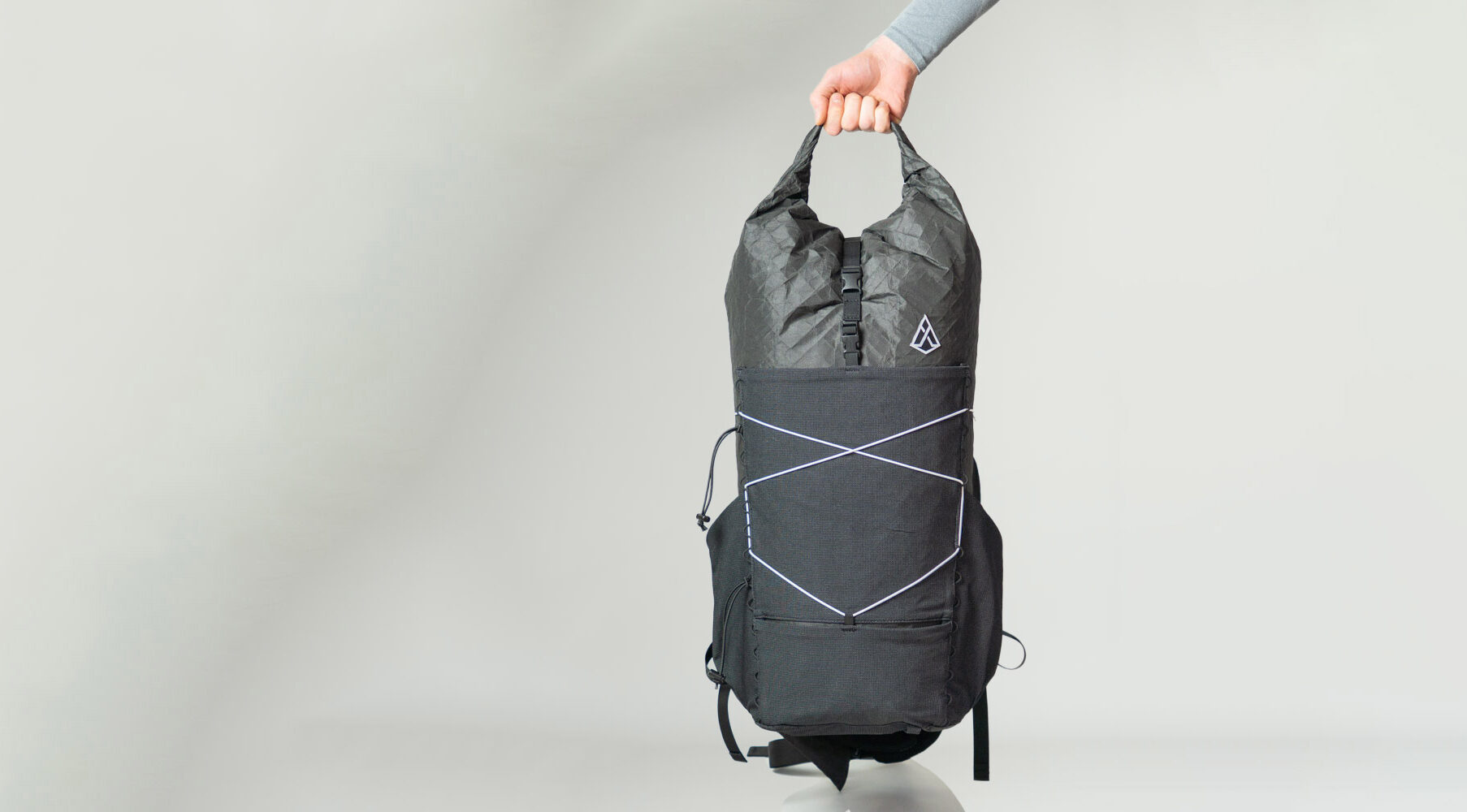
Wer schon einmal mit einem überladenen Trekkingrucksack mehrere Tage am Stück unterwegs war, kennt das Problem: stechende Schmerzen in den Schultern, müde Knie, brennende Füße. Bei einem Gesamtgewicht von 20 Kilogramm und mehr ist das fast unausweichlich. Für mehrwöchige Expeditionen in extreme Klimaregionen mag so ein Rucksack die richtige Wahl sein. Für die meisten Mehrtages-Touren in Mitteleuropa ist er deutlich überdimensioniert.
Ein ultraleichter Rucksack ist eine spannende Alternative. Er verlangt einen ehrlichen Blick auf das, was wirklich gebraucht wird, und belohnt diese Ehrlichkeit mit einer Bewegungsfreiheit, die mit einem klassischen 3-Kilo-Rucksack einfach nicht möglich ist. In diesem Ratgeber gehen wir gemeinsam durch alle wichtigen Themen: was einen UL-Rucksack ausmacht, welche Materialien zählen, wie viel Volumen du wirklich brauchst, wie du ihn richtig packst, und für welche Touren er funktioniert.
Was genau ist ein Ultraleicht-Rucksack?
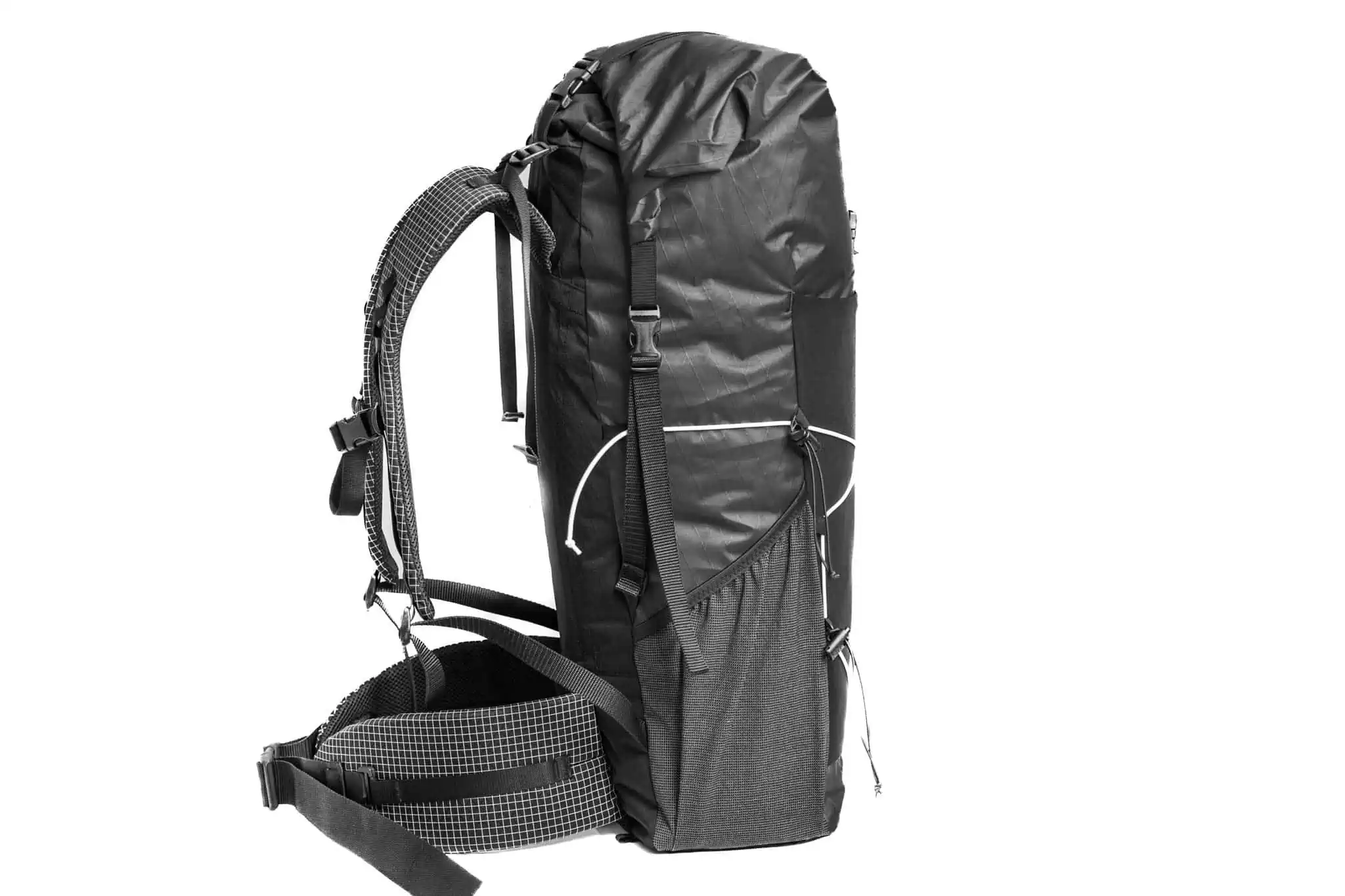
Ein ultraleichter Rucksack ist in den Grundzügen mit einem klassischen Trekkingrucksack vergleichbar. Beide haben ein großes Hauptfach, einige Außentaschen und gepolsterte Schultergurte. Damit hören die Gemeinsamkeiten allerdings meistens auch schon auf.
Der UL-Rucksack zeichnet sich durch eine sehr minimalistische Konstruktion aus. Alle überflüssigen oder zu schweren Features werden konsequent reduziert, weil das Ziel das geringe Gesamtgewicht ist. Im Gegenzug entsteht eine Bewegungsfreiheit, die das Wandererlebnis spürbar intensiviert. Die größte Gewichtsersparnis kommt fast immer durch das Weglassen massiver Tragegestelle und überdimensionierter Polsterungen.
Auch auf einen Deckel, zahllose Innentaschen und versteifte Hüftgurte wird oft verzichtet. Mit einer ultraleichten Trekkingausrüstung oder dem leichten Gepäck einer Hüttenwanderung sind diese Features nicht mehr nötig. In der Folge braucht es auch kein Volumen über 60 Litern. Je leichter die Ausrüstung, desto kleiner ist sie meist auch, und so lässt sich erneut effektiv an Material sparen.
Konkrete Zahlen: ultraleichte Rucksäcke wiegen teilweise unter 500 Gramm, während einige große Vertreter der konventionellen Trekkingrucksäcke schnell bis zu 3 Kilogramm auf die Waage bringen.
Was einen guten UL-Rucksack ausmacht
Auch zwischen den ultraleichten Rucksäcken gibt es viele verschiedene Ausführungen und Konstruktionen. Während einige Hersteller auf das minimal mögliche Gewicht hin optimieren, suchen andere eine ehrliche Balance zwischen Haltbarkeit und niedrigem Eigengewicht.
Sinnvolle Merkmale
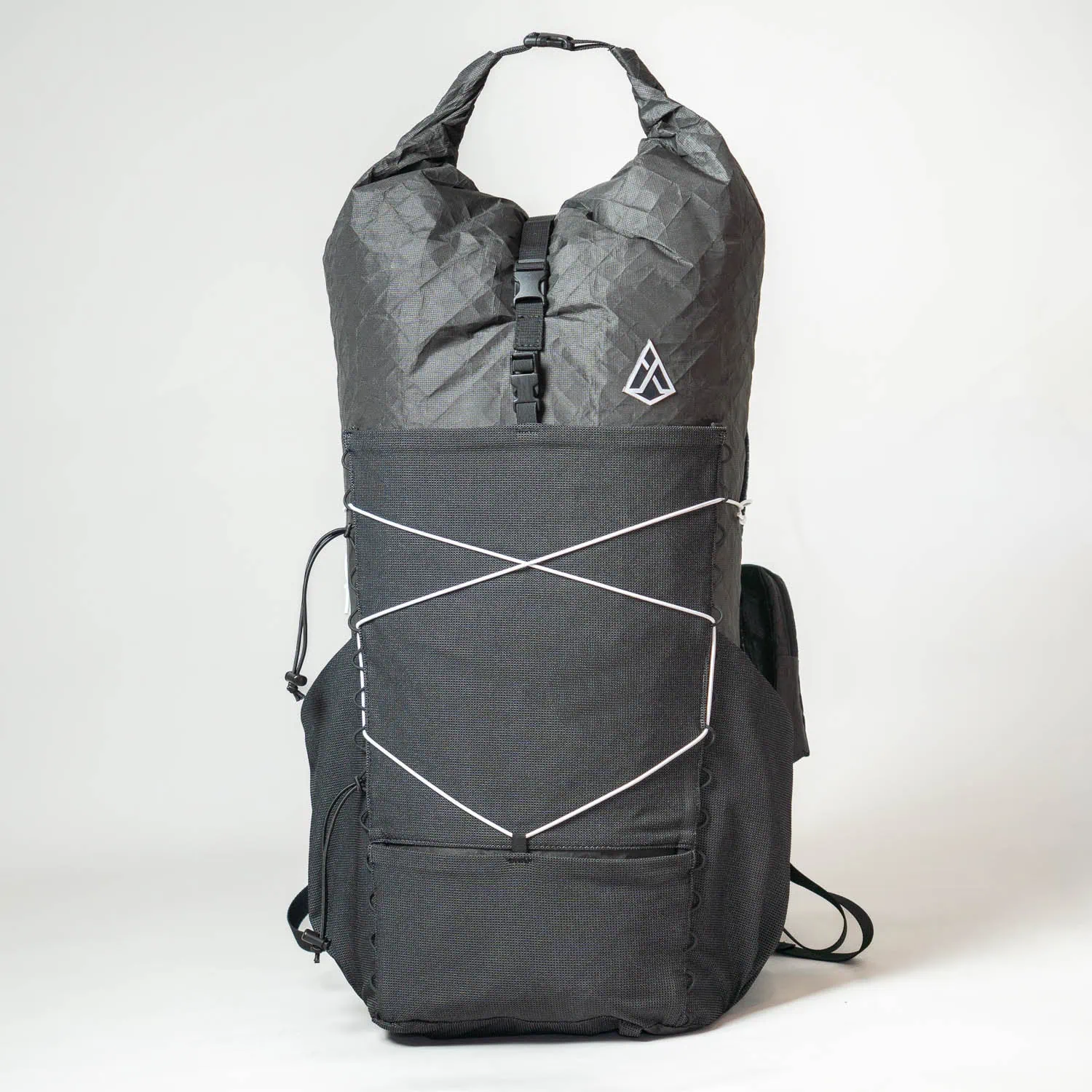
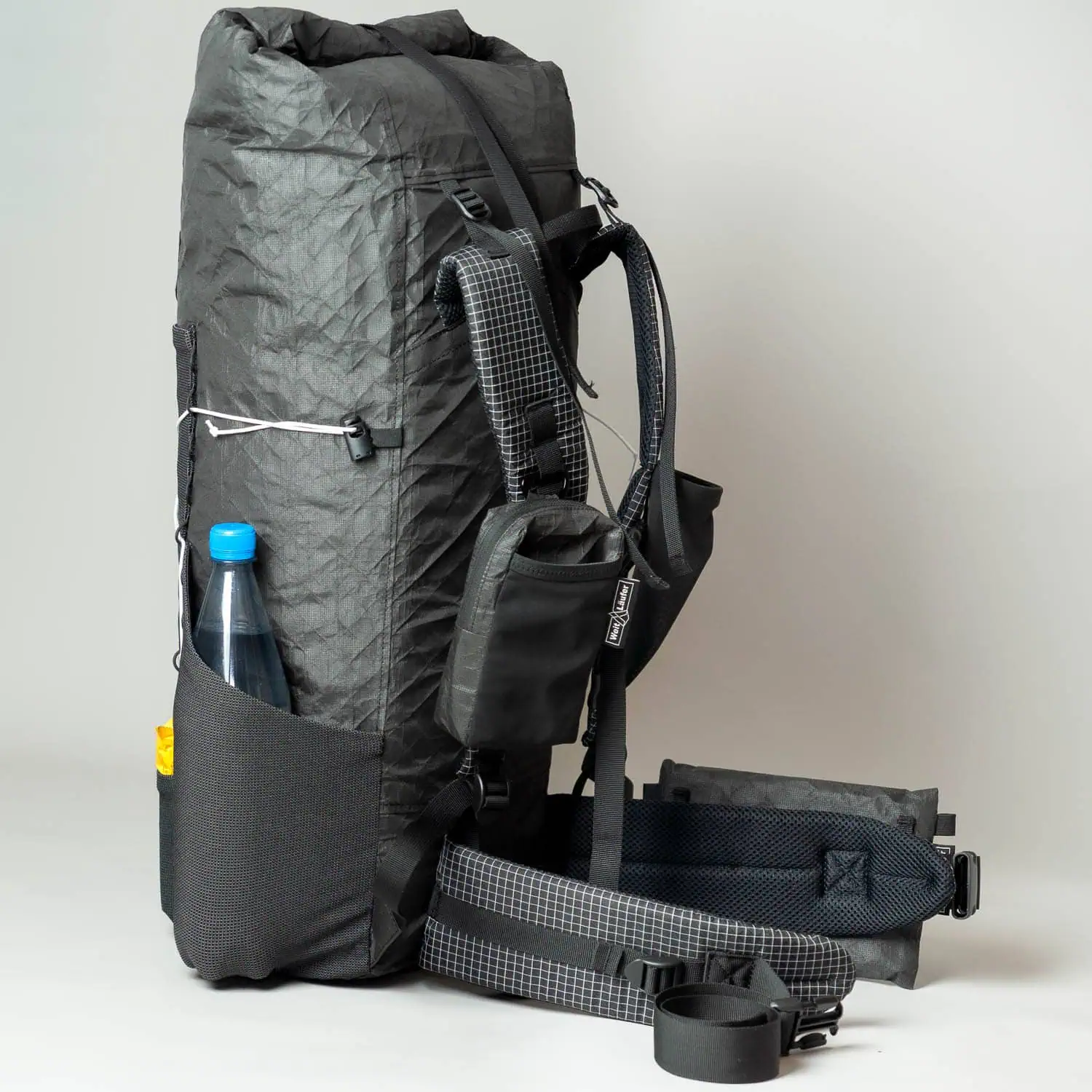
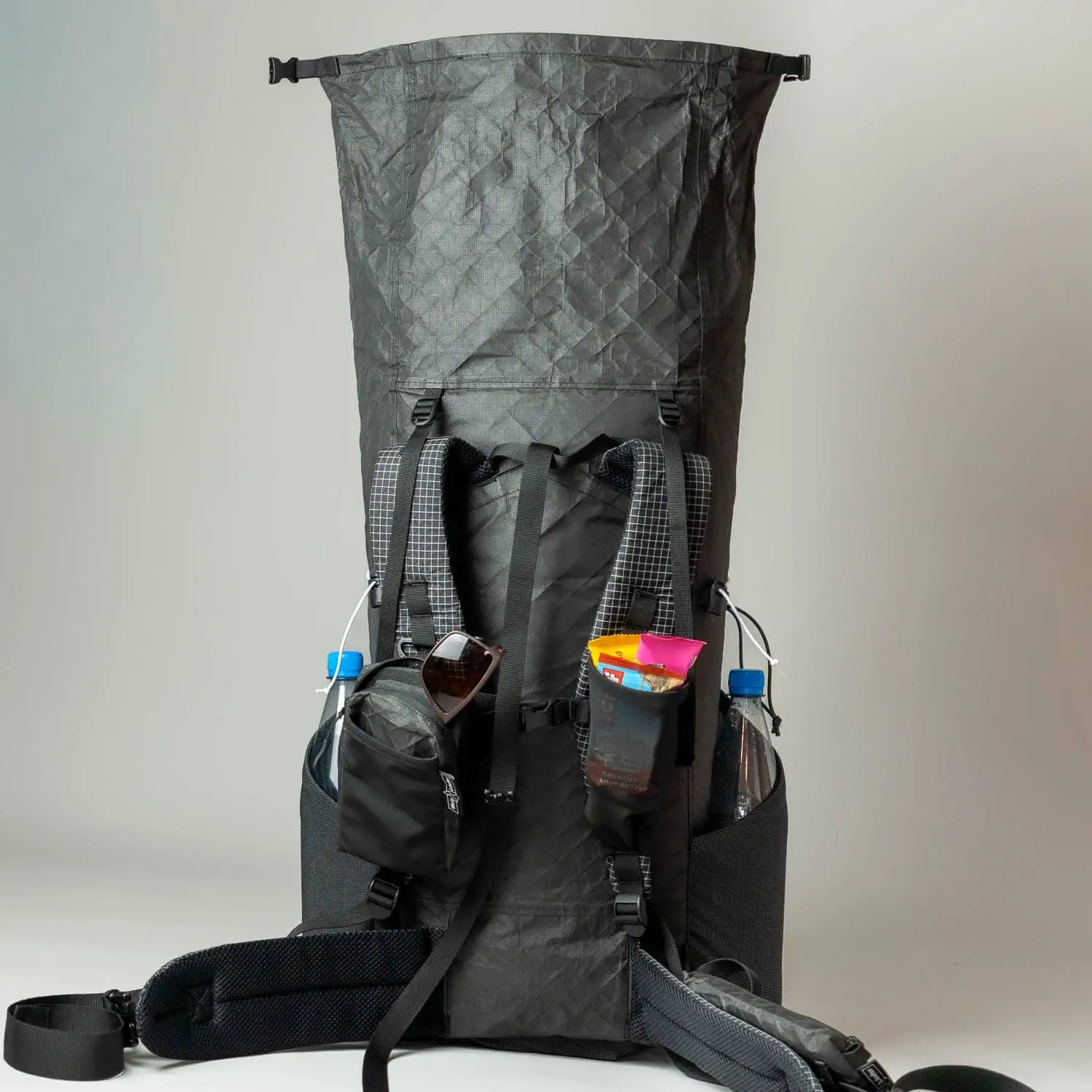
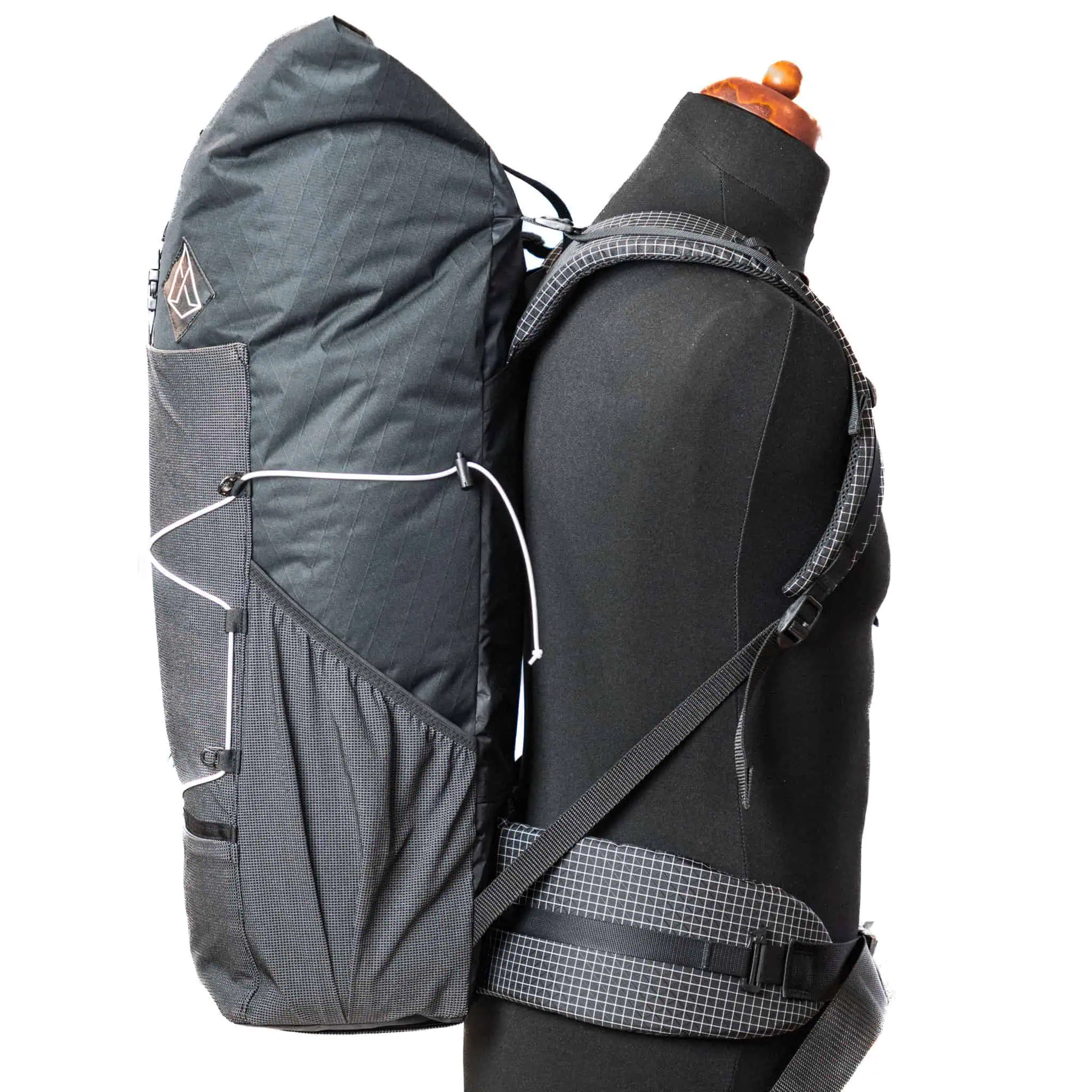
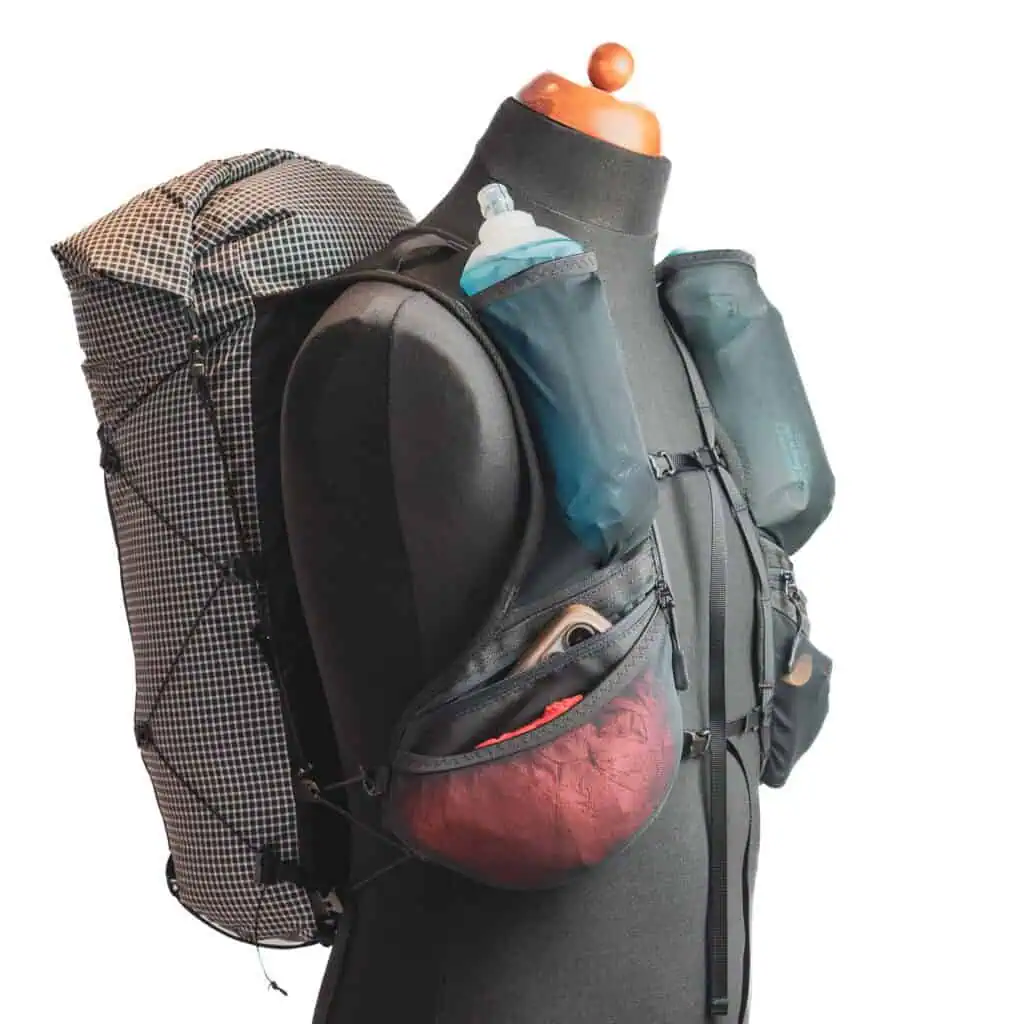
Diese Features finden sich an gut durchdachten UL-Rucksäcken (zum Beispiel am Agilist):
- Seitentaschen für Wasserflaschen oder leicht zugängliche Gegenstände
- elastische Fronttasche für nasse Kleidungsstücke
- gepolsterte Schultergurte
- leichte und dennoch abriebfeste Materialien
- Zusatztaschen an Schultergurten oder Hüftgurt für Smartphone, Kamera, Snacks
- leichte Brust- und Hüftgurte für besseren Tragekomfort
- Schlaufen, um weitere Ausrüstung außen am Rucksack zu befestigen
- Verzicht auf schwere Tragegestelle
- Verzicht auf übermäßig dick gepolsterte oder versteifte Hüftflossen
Materialien im UL-Rucksack
Ultraleichte Rucksäcke greifen häufig auf leichte Nylon-Gewebe mit Einwebungen reißfester Verstärkungsfäden zurück. Das prominenteste Beispiel ist Dyneema Gridstop. Auch mehrlagige, sehr leichte und dennoch abriebfeste Laminate wie X-Pac kommen gerne zum Einsatz. Der große Vorteil von X-Pac: das Material ist zu 100 Prozent wasserdicht. Die Wetterfestigkeit eines UL-Rucksacks lässt sich damit entscheidend erhöhen.
Die neueste Hightech-Generation, die auch bei UL-Rucksäcken immer beliebter wird, sind Laminate, die teilweise aus UHMWPE (Ultra-High-Molecular-Weight-Polyethylene) bestehen. UHMWPE-Fasern sind aktuell die beste Kombination aus Reißfestigkeit, Abriebfestigkeit und Materialgewicht, die am Markt zu bekommen ist. Ein bekanntes Beispiel ist neben Dyneema das Ultra 200-Laminat von Challenge Sailcloth. Die Außenseite besteht zu 67 Prozent aus extrem reißfesten 200-Denier-UHMWPE-Fasern und zu 33 Prozent aus recyceltem Polyester. Das relative Gewicht von 119 g/m² der Ultra-200-Variante lässt sich kaum unterbieten.
Die Auswahl des Hauptmaterials hat zwar einen Einfluss auf das spätere Gewicht des Rucksacks, aber nicht in dem Maße, wie es die Reduktion überflüssiger Produktmerkmale tut. Der Verzicht auf ein schweres Tragegestell trägt deutlich mehr zur Gewichtsreduktion bei als die Verwendung des dünnsten und leichtesten Hightech-Gewebes.
Da viele Leichtrucksäcke dennoch dünnere Materialien einsetzen als ihre schwergewichtigen Pendants, ist ein pfleglicher Umgang ratsam. Scharfkantige und spitze Gegenstände sollten im Inneren ebenso vermieden werden wie eine gnadenlose Überladung. Eine leichte Trekkingausrüstung ist daher die ideale Kombination für deinen UL-Rucksack.
Tragesystem ohne klassisches Gestell
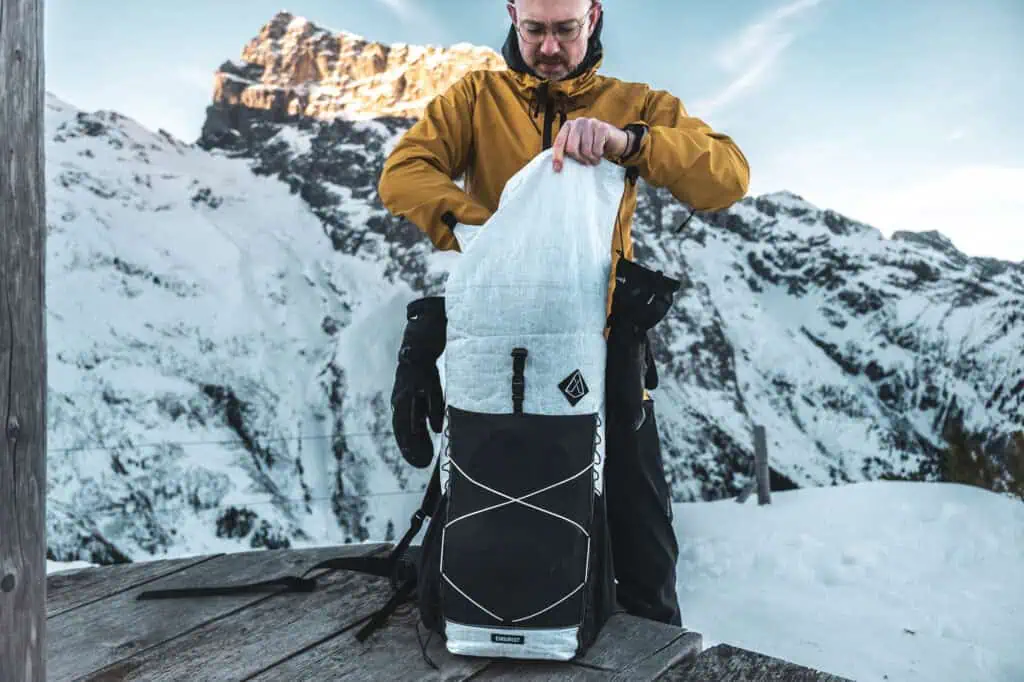
Aufgrund des fehlenden Tragesystems gibt der Inhalt dem Rucksack die nötige Stabilität. Der entscheidende Tipp lautet: ultraleichte Rucksäcke kompakt und voll packen. Halbvoll erreichen diese Rucksäcke nicht ihren optimalen Tragekomfort.
Einige Modelle haben eine Versteifung in Form einer entfernbaren Schaumstoffpolsterung oder einer leichten Kunststoffplatte. Diese Versteifungen geben dem Rucksack auch in leerem Zustand noch Struktur, polstern den Rücken gegen den Inhalt ab und leiten das Gewicht besser an den Hüftgurt. So bleibt der Tragekomfort hoch, falls auch einmal etwas mehr Wasser oder Proviant getragen werden muss. Bei Bedarf lassen sich die Polsterungen oder Platten in vielen Fällen aus der Innentasche herausnehmen.
Wie viel Gewicht und Volumen passt rein?
Maximale Zuladung
Ein UL-Rucksack wird sinnvollerweise erst dann ausgewählt, wenn die übrige Trekkingausrüstung bekannt und schon auf ein leichtes Maß reduziert worden ist. Erst dann ist klar, wie viel Volumen wirklich gebraucht wird. Im Idealfall liegt das Basis weight der Ausrüstung (also alles ohne Proviant, Wasser und Brennstoff) bei nur noch 5 bis 6 kg.
Inklusive Verpflegung, Wasser und Brennstoff sollte das Gesamtgewicht der Ausrüstung die Grenze von 10 bis 12 Kilogramm bestenfalls nicht überschreiten. Die meisten UL-Rucksäcke halten strukturell zwar mehr Gewicht aus, aber je nach Modell leidet dann der Tragekomfort. Diese Komfort-Grenze ist sehr subjektiv: manche Wanderer tragen mit einem UL-Rucksack auch 15 Kilo, andere sehen schon bei 8 Kilo ihre Komfortgrenze erreicht.
Welches Volumen brauche ich?
Das Volumen hängt entscheidend von der geplanten Tour und ihrer Länge ab. Wie viel Proviant musst du gleichzeitig tragen? Ab wann kannst du deine Vorräte wieder auffüllen?
| Art der Tour | Benötigtes Volumen |
|---|---|
| Drei-Jahreszeiten-Trekking mit ultraleichter Ausrüstung, Resupply alle 3 bis 5 Tage | 35 bis 40 Liter |
| Drei-Jahreszeiten-Trekking mit ultraleichter Ausrüstung, Resupply alle 5 bis 8 Tage | 40 bis 50 Liter |
| Drei-Jahreszeiten-Trekking mit ultraleichter Ausrüstung, Resupply alle 10 bis 14 Tage | 60+ Liter |
Resupply bedeutet die Möglichkeit, unterwegs Proviant einzukaufen oder aufzufüllen. Auf dem E5 oder dem Traumpfad München-Venedig liegen Versorgungsmöglichkeiten oft 3 bis 5 Tage auseinander, auf der GTA sind es manchmal 6 bis 8 Tage, auf abgelegenen Routen wie Wien-Nizza in seinen einsamsten Abschnitten auch mal 10 Tage.
Dein Trail. Dein Pack.
Stell deine Tour ein — wir empfehlen dir den passenden Rucksack. Mit Live-Gewichtsanalyse, Zuladungs-Check und Größenempfehlung.
- 1 Wähle ein Szenario als Schnellstart oder pass die sechs Slider an deine Tour an — Base Weight, Tage, Wasser, Extras, Körpergröße und Präferenz.
- 2 Sieh live, wie sich dein Gesamtgewicht zusammensetzt und welcher Pack noch Reserven hat.
- 3 Du bekommst eine begründete Empfehlung mit Trail-Beispielen und passender Rückenlänge.
Trailist
from 289 g · 27 L · max. 8 kg · Trail/Fastpacking
Agilist 2026
570 g · 54 L · max. 13 kg · Ultra 200X
Endurist
ab 747 g · 65 L · max. 18 kg · Aluminium frame
—
Wie packt man einen UL-Rucksack richtig?
Ein häufiges Vorurteil gegenüber dem ultraleichten Rucksack ist der scheinbar mangelnde Tragekomfort. Das lässt sich schnell entkräften, denn Tragekomfort hängt immer auch von der Art und Weise des Packens ab. Bei einem UL-Rucksack macht sich die richtige Packtechnik deutlich stärker bemerkbar als bei einem klassischen Trekkingrucksack mit Tragegestell, weil dort der Rahmen viel verzeiht. Ohne Rahmen wird die Last eins zu eins so getragen, wie der Rucksack gepackt ist.
Leichte Dinge nach unten
Schlafsack und Daunenjacke kommen ganz nach unten. Sie sind zwar voluminös, aber leicht und müssen unterwegs nicht zugänglich sein.
Schwere Gegenstände nah an den Rücken
Wasserflaschen, Kocher mit Brennstoff, der Proviant für den Tag: alles, was Gewicht hat, gehört möglichst nah an den Rücken auf Schulterblatt-Höhe. Das senkt den Schwerpunkt und entlastet die Schultern.
Medium heavy equipment farther at the top
Zelt oder Tarp, Wechselkleidung, Hygieneartikel füllen den oberen Bereich. Sie balancieren das Gesamtgewicht aus.
Leerraum konsequent vermeiden
10 bis 20 Prozent Restvolumen reichen aus. Wer halbvoll packt, gibt dem Rucksack keine Stabilität, die Last wandert beim Gehen und reibt an den Schultern.
Spitze Ausrüstung weg vom Rücken
Hering-Beutel, Trekkingstock-Spitzen, Messer: alles Spitze gehört nach außen oder in eine separate Tasche. Sonst drückt es nach mehreren Stunden unangenehm zwischen Rückenpolster und Inhalt.
Nach dem Packen komprimieren
Kompressionsriemen oder Roll-Top fest zuziehen. Ein gut komprimierter UL-Rucksack sitzt deutlich stabiler als einer, der schlapp am Rücken hängt.
Mit dieser Packtechnik trägt sich auch ein UL-Rucksack ohne Rahmen sehr angenehm auf den Schultern, und durch das geringe Gewicht auch über lange Zeit und weite Strecken. Viele aktuelle UL-Modelle haben zudem dick gepolsterte Schultergurte, die auch mal etwas mehr Last verzeihen.
Wofür ein UL-Rucksack besonders gut funktioniert
Klassisches Ultraleicht-Trekking
Der klare Hauptanwendungsfall: mehrtägige bis mehrwöchige Touren mit Zelt oder Tarp, eigenem Schlafsystem und Selbstversorgung. Hier spielt der UL-Rucksack alle seine Stärken aus. Ein Basisgewicht zwischen 4 und 6 kg, dazu Proviant und Wasser, ergibt ein Gesamtgewicht zwischen 8 und 12 kg, genau in dem Bereich, in dem ein gestelloser Leichtrucksack am besten arbeitet.
Auf dem Pilgerweg
UL-Rucksäcke sind nicht nur für Touren mit Zelt und Schlafsack gedacht. Wer auf einem der zahlreichen Jakobswege unterwegs ist, profitiert deutlich vom geringen Eigengewicht. Ohne Zelt und Isomatte fallen einige der größten Posten aus der Packliste der meisten Pilger heraus. Da aber die meisten Pilger einen vollwertigen Schlafsack für die Herbergen mitnehmen, lässt sich auch mit weniger Gepäck zu viel Leerraum im UL-Rucksack vermeiden.
Eine typische Ausrüstung für eine mehrwöchige Jakobsweg-Pilgerung wiegt zwischen 5 und 8 kg, also optimal in der Zuladungs-Range eines gestellosen Leichtrucksacks, selbst noch mit etwas Proviant und Wasser. Wie auf allen anderen Touren gilt: kompakt und voll packen, dann ist der Tragekomfort am höchsten.
Auf Hüttentour
Ähnliches gilt für mehrtägige Hüttentouren. Je nach Komfortbedürfnis liegt das Gewicht einer leichten Hüttentour-Ausrüstung zwischen 2 und 8 Kilogramm. Da bei einer Hüttentour meist weniger voluminöse Gegenstände transportiert werden, ist eine sinnvolle Platznutzung wichtig. Wenn die meisten Gegenstände im Inneren verstaut sind, kann es sinnvoll sein, die dicke Daunen- oder Primaloft-Isolationsjacke ganz oben in den Rucksack zu packen. Sie vermeidet Leerraum und gibt dem Inhalt eine gute Struktur.
Je nach Hüttentour und Jahreszeit lohnt es sich, einen etwas dickeren Schlafsack statt eines dünnen Inletts mitzunehmen. Auf nicht allen Hütten sind dicke Wolldecken in ausreichender Anzahl vorhanden, und eine kalte Nacht im Massenlager macht den nächsten Tag schwer.
Frequently Asked Questions
Wie robust ein Rucksack ist, hängt vor allem von den verwendeten Materialien ab. Im UL-Segment gibt es viele sehr robuste Vertreter. Entscheidend ist, welche Aktivitäten geplant sind. Touren auf markierten Wanderpfaden beanspruchen das Material kaum, Querfeldein-Touren in der Wildnis hingegen schon. Wer beides kombinieren möchte, sollte auf eine Materialstärke oberhalb von 200 Denier achten. Eine sehr gute Balance aus Haltbarkeit und Leichtgewicht bieten Materialmixe aus Ultra 200, 210-Denier-X-Pac oder 500-Denier-Cordura. Alle drei Varianten wiegen vergleichsweise wenig, sind aber sehr abriebfest.
Die Verwendung hochwertiger Materialien spiegelt sich teilweise im Preis wider, aber bis auf einige Ausnahmen kosten UL-Rucksäcke nicht viel mehr als konventionelle Trekkingrucksäcke bekannter Marken. Die meisten Modelle liegen im Segment zwischen 150 und 300 Euro. Viele werden von kleineren Manufakturen hergestellt, die gerade deshalb sehr hochwertige Materialien verwenden. Beim Vergleich verschiedener Modelle lohnt es sich, genau auf die verwendeten Materialien zu achten. Günstigere UL-Rucksäcke gibt es von Zeit zu Zeit auch in der WeitLäufer Prototypen-Kategorie, dort sind zu Testzwecken genähte Einzelstücke zu vergünstigten Konditionen erhältlich.
Das hängt von der Tour-Länge zwischen den Resupply-Punkten ab. Für 3 bis 5 Tage Resupply-Abstand reichen 35 bis 40 Liter, für 5 bis 8 Tage 40 bis 50 Liter, für 10 bis 14 Tage Selbstversorgung 60 Liter und mehr. Wichtig ist, das Volumen erst nach Optimierung der übrigen Ausrüstung festzulegen, weil reduzierte UL-Ausrüstung deutlich weniger Platz braucht als klassische Trekking-Ausrüstung.
Bei Basisgewichten bis 7 kg ist ein klassisches Tragegestell nicht nötig. Stattdessen gibt der Inhalt selbst dem Rucksack Stabilität, idealerweise unterstützt durch eine herausnehmbare Schaumstoffpolsterung oder Kunststoffplatte. Wichtig ist, den Rucksack kompakt und voll zu packen. Eine herkömmliche Isomatte kann ebenfalls als Stabilisierung verwendet werden, indem sie in gerolltem Zustand zuerst in den Rucksack gepackt wird und sich dort entfaltet.
Ja. Auf Pilgerwegen wiegt eine typische Ausrüstung 5 bis 8 kg, auf Hüttentouren 2 bis 8 kg. Beides liegt optimal in der Zuladungs-Range eines gestellosen UL-Rucksacks. Wichtig ist, den Rucksack kompakt zu packen, gegebenenfalls eine Daunenjacke oben einzulegen, um Leerraum zu vermeiden, und die Isolations-Eigenschaften des Schlafsacks an die jeweilige Saison anzupassen.