
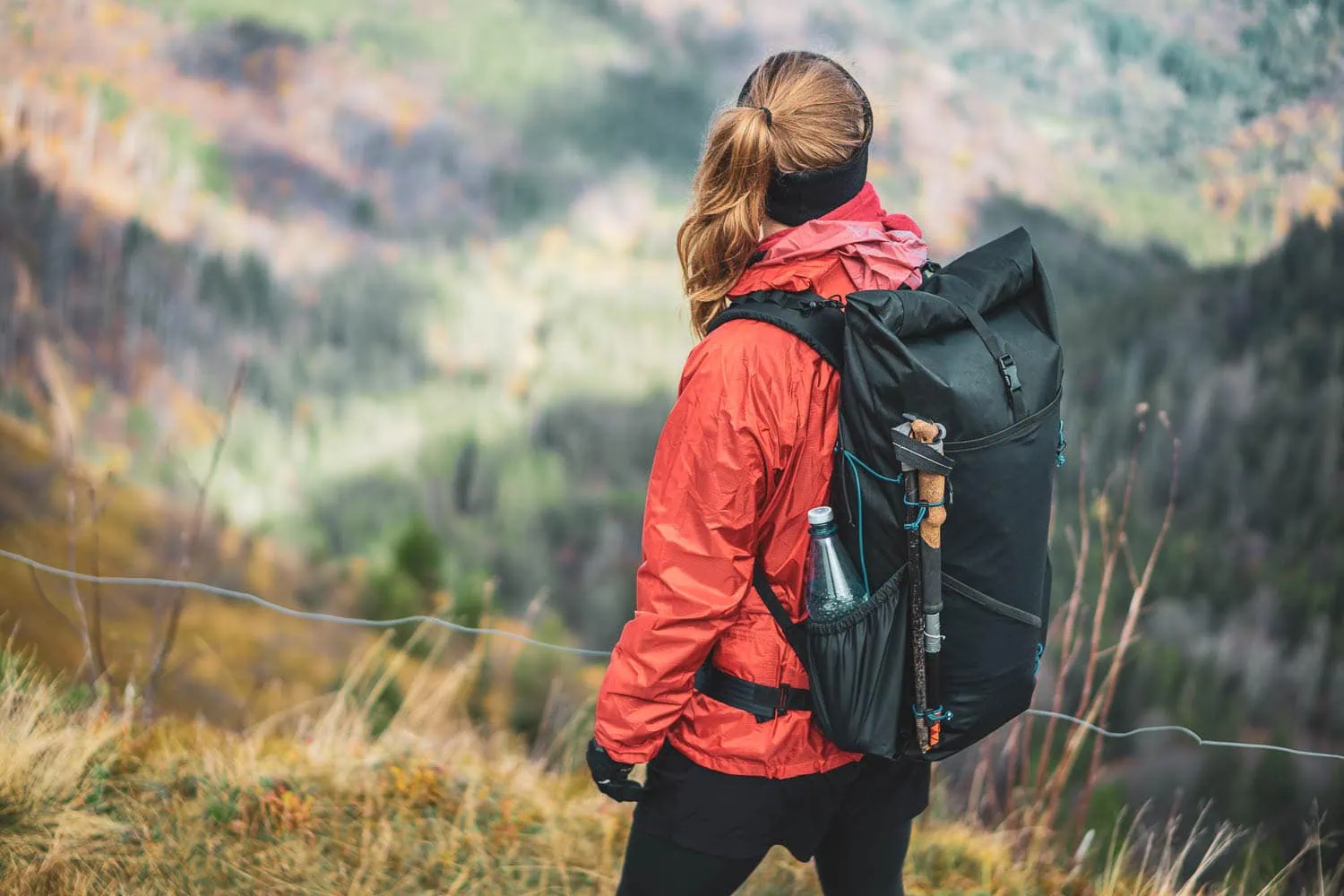
A small daypack is the best decision that many hikers never make, because they are guided by the reflex of „better too big than too small“. Yet the question of volume is the most important lever for a light, comfortable carrying feel. Before we get to litres and models, it is worth taking an honest look at what you actually carry.
Here at WeitLäufer, we make rucksacks designed for exactly this mindset. And the phrase we hear most often when someone deliberately packs light for the first time is: „I never thought so little would be enough.“ Let’s take a look at why this happens so reliably.
Small daypack: how many litres do you really need?
Anyone looking for a small hiking backpack usually already has the right instinct: that the large rucksack in the wardrobe is oversized for the vast majority of trips. A small backpack, by which we roughly mean the range of 20 to 35 litres, is for day trips like around Freiburg, weekend excursions and mountain hut tours, the most honest tool. It fits what you really need, rather than what you might eventually end up taking with you.
The standard answer in most guidebooks works with broad litre ranges, and as a first orientation they are correct. For a day hike in the mountains, 15 to 30 litres are enough, for a weekend or hut-to-hut tour 25 to 40, for longer multi-day treks 30 to 45, and it is only with a tent and sleeping system that you end up at 40 to 70 litres.[1]
These figures help, but they tempt you into overbuying. What many overlook: The tour type determines the volume, much more so than the tour duration. Whether you sleep in a mountain hut or guesthouse in the evening or are out independently with a tent makes a bigger difference than an extra day. And especially as a beginner, you are better off choosing a smaller one, because too large a rucksack tempts you to take unnecessarily much with you.[2]
Which volume for which tour
Instead of a single figure, a classification based on what the tour actually demands is helpful. The following table has been calculated conservatively on purpose, meaning rather tight than generous, because packing habits will fill the gap anyway. An exception is winter: With the Winter walking the day tour is already slipping towards 25 to 30 litres, because an insulation jacket and warm spare layers take up space.
| Tourart | Volume | What goes in |
|---|---|---|
| Half-day and after-work tour | 15 to 20 l | Water, snack, waterproof jacket, spare layer. That is all it takes. |
| Long day tour, challenging terrain | 25 to 30 l | Provisions, shift work, first aid, a bit of a reserve. The classic. |
| Weekend with overnight stay in a mountain hut or guesthouse | 25 to 35 L | No sleep system needed, just a change of clothes and hut gear. |
| multi-day tour, fixed accommodation | 30 to 40 litres | A bit more clothing and buffer, still without a tent. |
| Self-sufficient with tent and sleep system | 40 to 65 L | Shelter, sleeping bag, sleeping mat, provisions. In a league of its own. |
Anyone who takes an honest look will notice: the majority of all hikes that people actually go on take place in the top three lines. Exactly for this reason, the small rucksack is the right choice for most people.
Is a 30-litre rucksack enough?
Short and honest: for almost anything that isn't tent trekking, yes. 30 litres easily covers long day trips, weekend trips and even multi-day trips with fixed accommodation. The 30-litre mark is something like the all-rounder sweet spot—big enough for a change of clothes, rain protection, food and an extra layer, yet small enough that you don't start filling the space with clutter.
An example makes this tangible. For a weekend mountain hut tour, 30 litres easily accommodates: an insulated jacket, a spare T-shirt, two pairs of socks, shorts for the evening, a lightweight hut sleeping bag, travel-sized toiletries, a first-aid kit, a headtorch, food for two days and a litre and a half of water. And there's still room to spare. The problem for most hikers is never the backpack being too small, but the temptation of the large one.
When 30 litres are not enough? Once a full sleep system is included, meaning a tent, sleeping bag and sleeping mat for self-sufficient overnight stays, then you need more, more on that below. For a classic hike without your own overnight accommodation, the question „is 30 litres enough“ can almost always be answered with a clear yes.
The overlooked kilo: why a lightweight hiking backpack matters
This is where it gets interesting, because „small“ and „light“ are not the same thing. Many of the most popular 30-litre rucksacks weigh between 1.0 and 1.5 kg themselves, because they feature a sturdy frame, thick padding and an integrated rain cover.[3] You carry this dead weight with you every single day, before there is even anything inside.
I made this change myself. On my first Alpine crossing, the Munich-Venice Dream Way in 2014, I was travelling with a trekking rucksack of over 55 litres. It weighed around 2.5 kg on its own and was half empty most of the time, even though I still had a total weight of 11 kg with me. On the Alpine crossing from Vienna to Nice in 2017, I then switched to an ultralight rucksack that weighed under 500 g. Just by swapping the rucksack, I got rid of 2 kg without losing any comfort. It was the most easily saved two kilos of all.
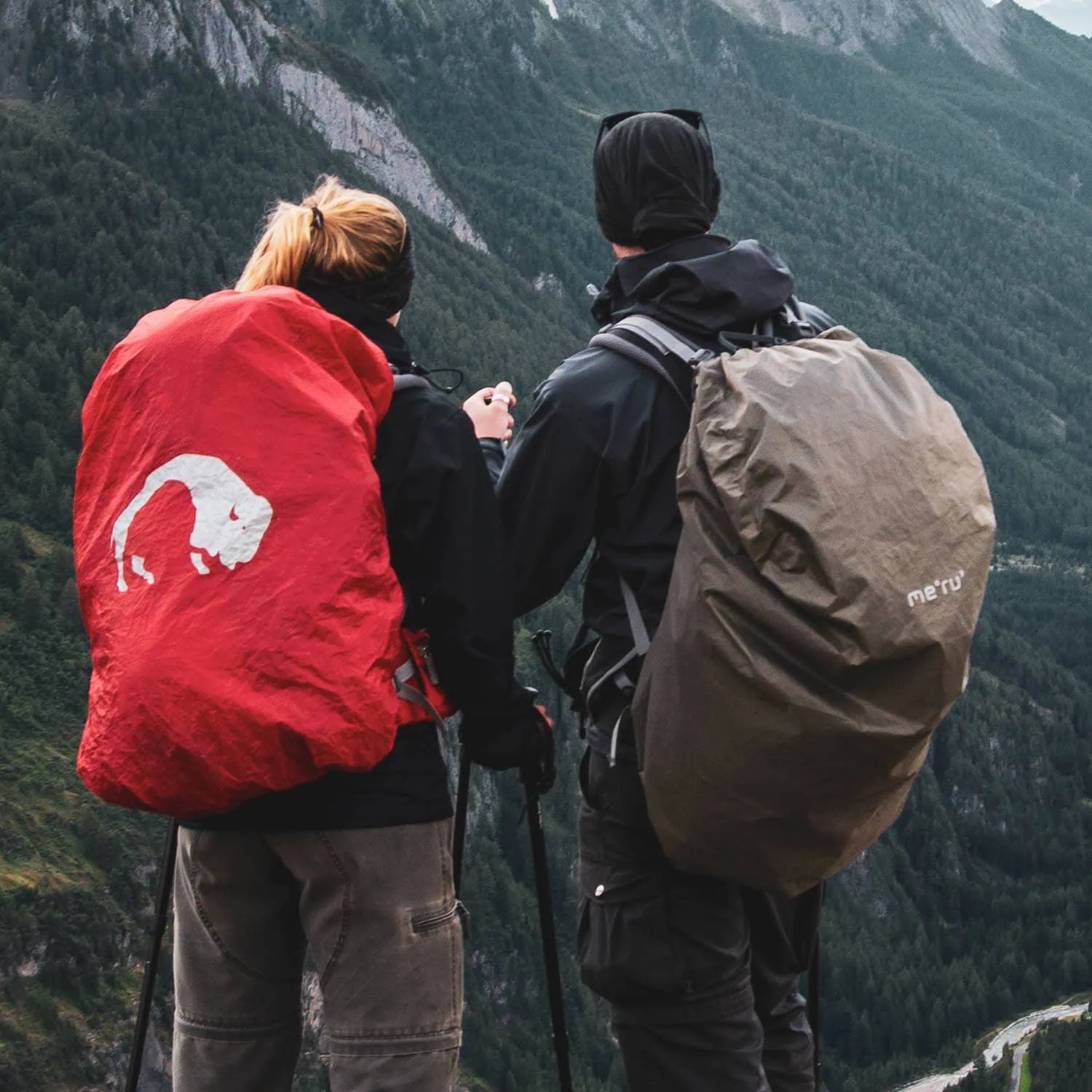
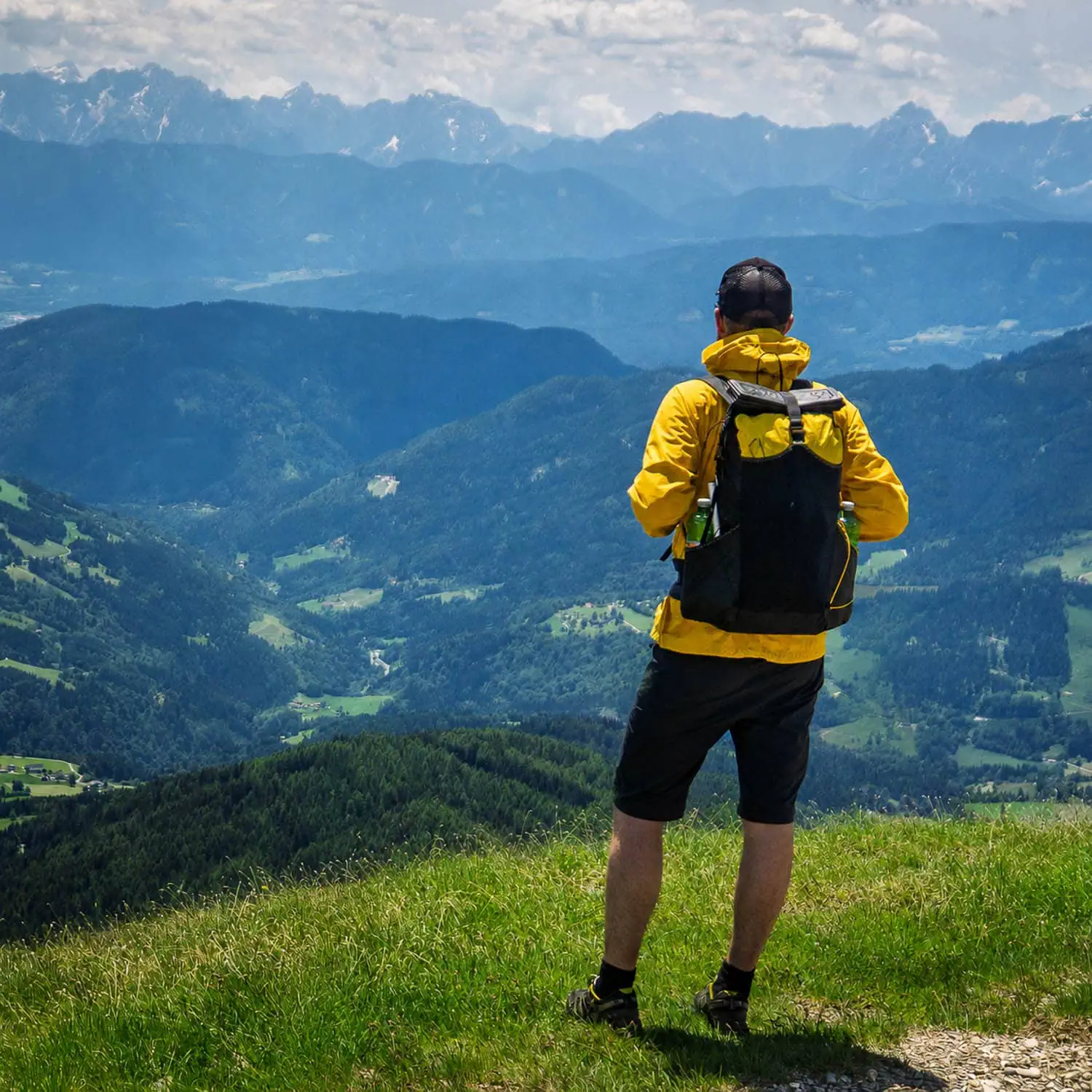
In the ultralight community, a rough classification based on base weight—that is, the weight of the equipment without consumables such as water and food—has become established: ultralight under 5 kg, light under 10 kg, traditional above that. Which category you choose is up to you, but the rucksack is always the easiest starting point because you save weight here without having to sacrifice anything.
A thought that often surprises beginners: small and easy to pack is often actually cheaper in the end. Anyone who takes less from the start also buys less stuff that just eats up space and weight. Instead of three jackets for every eventuality, the one right one is enough. Instead of the large backpack with twelve compartments, the small one that does exactly what you need. A light backpack is therefore less a question of budget than a question of deciding what really comes along. And with less volume, this decision becomes easier by itself.
| backpack style | dead weight | Consequence |
|---|---|---|
| Conventional hiking backpack | ~1,200 to 1,500 g | Frame, thick padding, rain cover. Carries itself along. |
| Lightweight hiking backpack | ~700 to 1,000 g | Stripped-down carrying system, fewer extras. |
| Ultralight rucksack | ~450 to 700 g | Slim, frame-poor, designed for low loads. |
What you should look for in a small rucksack
A small, lightweight backpack stands or falls by its fit. Five points determine carrying comfort more than any extra compartment:
The correct back length.
The most important point of all. A rucksack fits when the load sits on the hips, not on the shoulders. Measure your back length (neck to iliac crest) and choose the rucksack size according to this measurement. Clothing size tells you little about this.
load-bearing hip belt.
Even with a small volume, a hip belt should transfer the weight to the hips. For loads under 10 kg, it doesn't need to be bulky, but it must be present and well positioned.
Borderless or slim frame.
For light loads, there is no need for a heavy aluminium frame. A frameless or minimally stiffened backpack saves weight and carries brilliantly when packed properly.
External pockets for quick access.
Side stretch pockets for the water bottle, a front pocket for the wet rain jacket. This saves having to constantly unpack the main compartment.
Honest materials instead of the rain-cover reflex.
A good backpack material largely keeps water out. What matters in this regard is explained in the material glossary.
For women: short back lengths and narrow shoulders
A lightweight women's hiking backpack is not a marketing gimmick, but ergonomics. On average, women have shorter back lengths, narrower shoulders and a differently shaped iliac crest. A women's model (or a unisex backpack with a short back length and an adjusted hip belt) therefore fits noticeably better. Ultimately, however, what counts is the actual back length: if that fits, the backpack fits.

When a larger rucksack makes sense
As clearly as we argue for the small rucksack: there are trips for which 30 litres is honestly too tight. Anyone travelling self-sufficiently with a tent, sleeping bag and sleeping mat, planning longer self-catering stages without stopping off anywhere, or travelling in winter with thick insulation, needs more volume. The logic remains the same: the volume depends on what the trip actually demands.
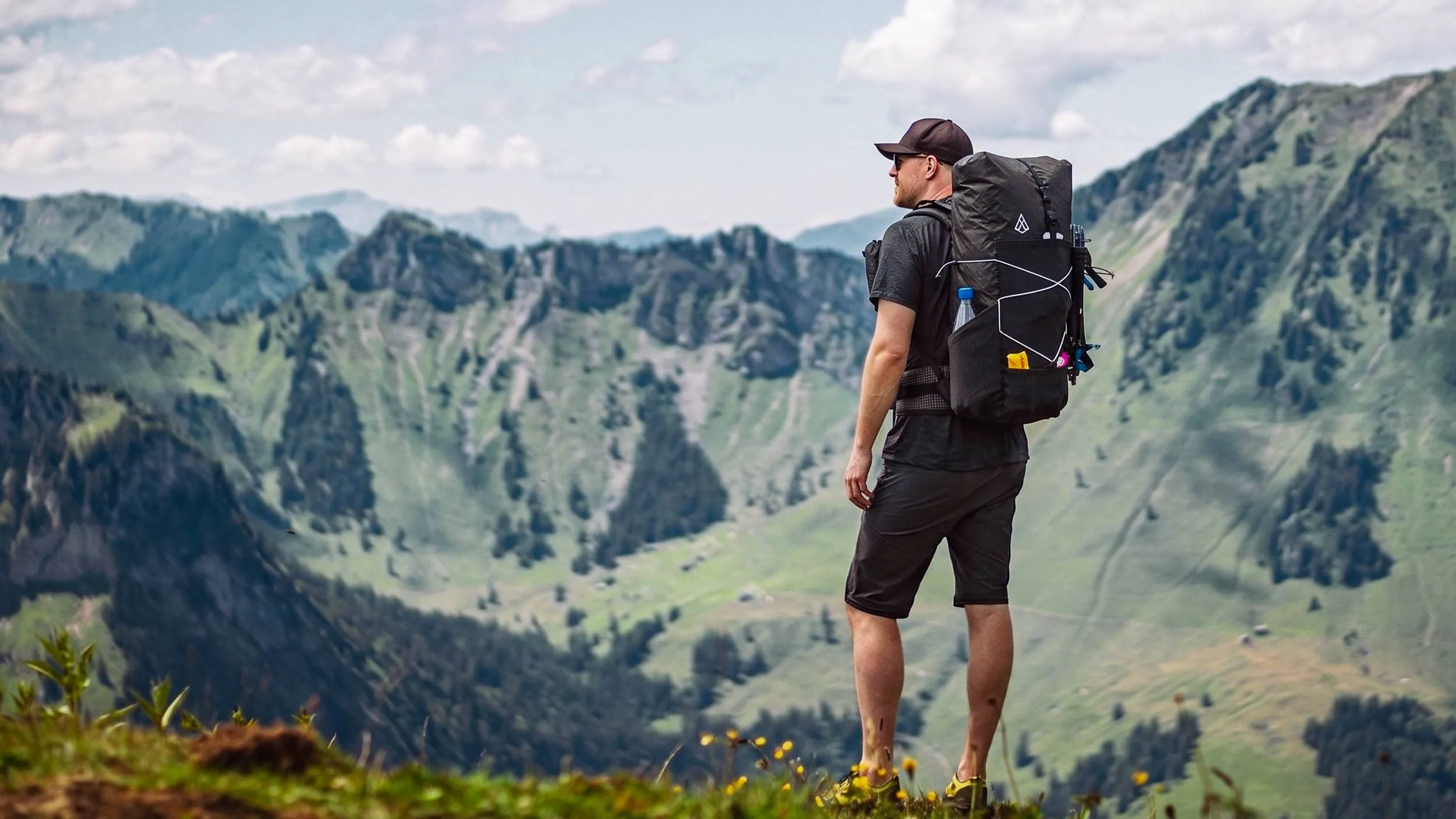
For this larger district we have the Agilist built: 40 litres in the weatherproof main compartment plus 14 litres in the external pockets, making 54 litres in total, and still ultralight. It is the rucksack for self-sufficient multi-day trips, whereas the smaller model is made for day and hut-to-hut tours. Which rucksack suits which use is shown to you by the Guide to Ultralight Rucksacks in detail.
Frequently Asked Questions
For almost everything except longer tent trekking, yes. 30 litres easily covers long day trips, weekend trips and multi-day trips with fixed accommodation. You only need more volume when a full sleeping system with a tent, sleeping bag and sleeping mat is included. Unless your trekking gear is absolutely ultralight and minimalist, then 30 litres works for an overnighter too.
For short trips, 15 to 20 litres are sufficient, while for long day trips in challenging terrain, 25 to 30 litres are the classic choice. This is enough space for provisions, a change of clothes, rain protection, and a little extra.
Small refers to volume, light to weight. A small rucksack can still be heavy if it has a thick frame and lots of extras. The ideal is both together: little volume and little weight.
Conventional 30-litre rucksacks often weigh between 1.2 and 1.5 kg. Lightweight models weigh between 700 and 1,000 g, and ultralight ones between 450 and 700 g. For loads under 10 kg, a streamlined carrying system is sufficient, and a heavy dead weight is unnecessary.
Not necessarily a women's model, but a suitable back length. Women on average have shorter backs and narrower shoulders. In the end, the actual back length is what counts.
If you’re travelling independently with a tent and sleeping kit, planning long self-catering stages without stopping for refreshments, or travelling in winter with thick insulation, then a capacity of 40 to 65 litres is a good choice – for example, the Agilist.
Sources
- Bergzeit Magazine, „What rucksack size do I need?“: Volume by tour type. bergzeit.co.uk
- Mammutmarsch, „Hiking backpack, what size for which tours?“: Tour type beats tour duration, beginners should choose smaller. mammutmarsch.de
- outdoor magazine, walking backpack test 25 to 30 litres: unladen weights of common models. outdoor-magazin.com