
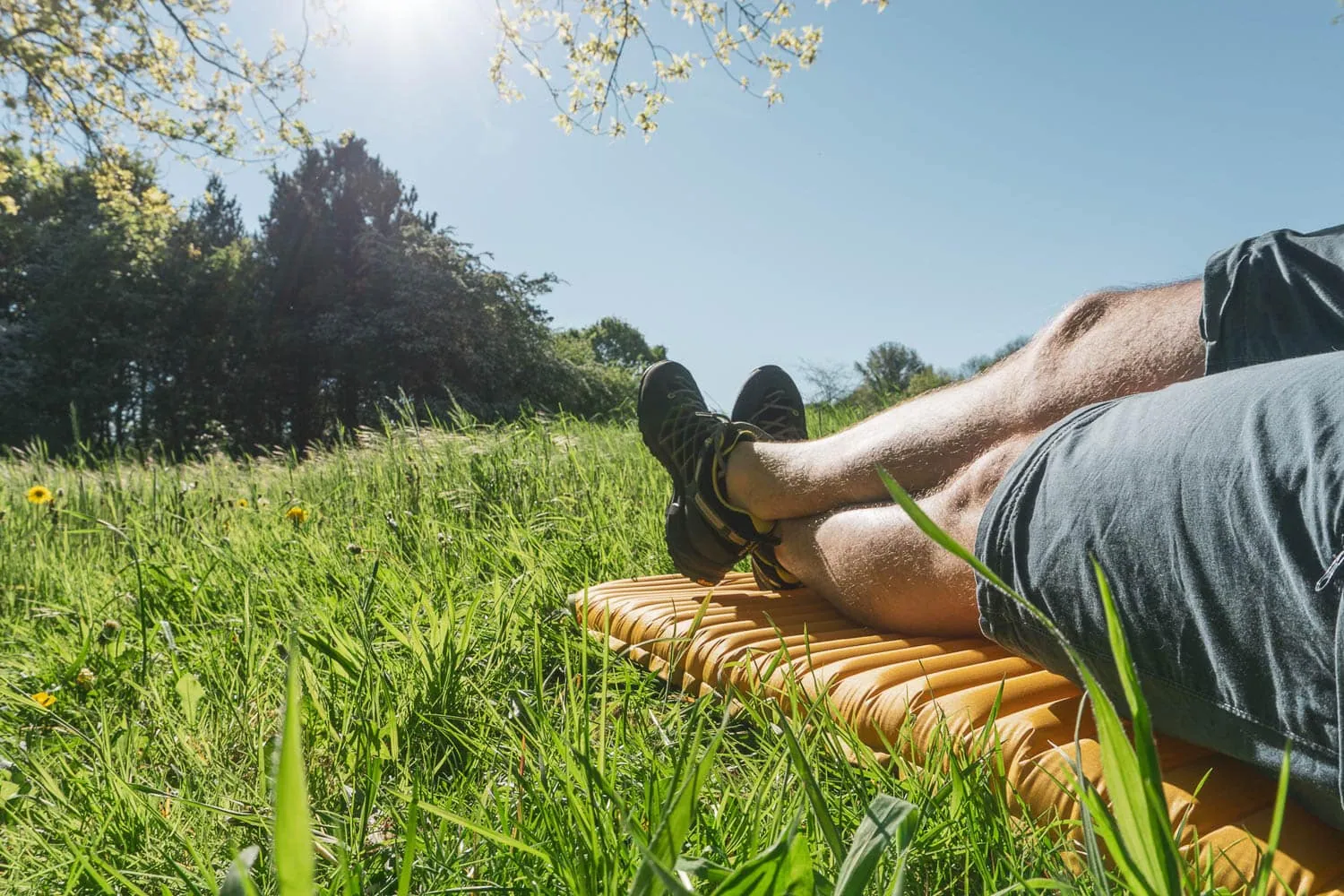
Eine gute ultraleichte Isomatte ist das Teil im Rucksack, über das am wenigsten geredet und am meisten geflucht wird. Alle starren auf das Schlafsackgewicht und die Daunen-Fillpower, dabei entscheidet die Handbreit Material zwischen Schlafsack und Boden über deutlich mehr Schlaf, als die meisten ahnen. Denn der wärmste Schlafsack der Welt hilft dir nichts, wenn die Bodenkälte ungebremst von unten durch dich hindurchzieht.
Ich verkaufe keine Isomatten. Wir bei WeitLäufer bauen Rucksäcke, und genau deshalb kann ich dir hier ohne Hintergedanken erzählen, worauf es bei der Matte wirklich ankommt: aus über zehn Jahren mit Matten unter dem Rücken, von einer leichten Sommernacht im Schwarzwald bis zur Alpendurchquerung von Wien nach Nizza. Am Ende weißt du, welcher R-Wert dir reicht, welche Bauart zu dir passt und warum die Isomatte und dein Rucksack mehr miteinander zu tun haben, als du denkst.
Warum die Isomatte das unterschätzte Teil im Schlafsystem ist
Mein erstes Mal mit einer billigen Ein-Zentimeter-Matte war eine Lehrstunde. Jedes noch so kleine Steinchen schien sich seinen Weg in meinen Rücken gebahnt zu haben, und am nächsten Morgen fühlte ich mich, als sei ich mehrfach von einem 40-Tonner überrollt worden. Der Schlafsack war warm genug. Es lag an den Millimetern darunter.
Das ist der Punkt, den viele übersehen: Ein Schlafsack hält die Wärme oben, aber unter deinem Körpergewicht wird die Daune oder Kunstfaser flachgedrückt und isoliert dort fast gar nicht mehr. Was dich von unten warm hält, ist allein die Isomatte. Sie macht zwei Jobs gleichzeitig, Komfort und Isolation, und beide entscheiden über deinen Schlaf. Deshalb lohnt es sich, sie als gleichwertigen dritten Teil der „Big Three“ zu behandeln, neben Rucksack und Schlafsack, statt als Zubehör.
Der R-Wert: die Zahl, auf die es ankommt
Wenn du dir nur eine einzige Kennzahl merkst, dann den R-Wert. Er beschreibt, wie gut eine Isomatte den Wärmestrom von deinem Körper in den kalten Boden bremst. Je höher der Wert, desto besser die Isolation. Anders als beim Schlafsack gibt es hier keine Temperatur in Grad, sondern eine reine Isolationszahl, und die ist linear: Eine Matte mit R 4 isoliert doppelt so gut wie eine mit R 2.
Das Praktische daran: Du kannst R-Werte addieren. Legst du im Winter eine Schaummatte (etwa R 2) unter deine Luftmatte (etwa R 3), kommst du in Summe auf rund R 5. Genau so machen es viele auf kalten Touren, statt eine schwere Wintermatte zu schleppen. Diese Stapel-Logik ist einer der Gründe, warum eine simple Schaummatte fast immer einen Platz im UL-Setup verdient, dazu später mehr.

| Einsatz | Empfohlener R-Wert |
|---|---|
| Warme Sommernächte, Hütten-Backup | ~1 bis 2 |
| Drei Jahreszeiten (Frühling bis Herbst, gemäßigt) | ~2,5 bis 4 |
| Kalte Nächte um den Gefrierpunkt | ~4 bis 5 |
| Winter, Schnee, dauerhaft Minusgrade | 5+ |
Warum du R-Werten heute trauen kannst
Lange Zeit kochte jeder Hersteller beim R-Wert sein eigenes Süppchen, und die Zahlen waren zwischen den Marken kaum vergleichbar. Seit der Einführung eines einheitlichen Messstandards (ASTM F3340) um 2020 herum messen die großen Hersteller wie Therm-a-Rest, Sea to Summit, Nemo und Exped nach demselben Verfahren. Heißt für dich: Ein R-Wert von 4,2 bei Marke A meint dasselbe wie ein R-Wert von 4,2 bei Marke B. Diese Vergleichbarkeit ist relativ neu, und sie ist der Grund, warum du dich beim Kauf inzwischen tatsächlich an der Zahl orientieren kannst, statt nur an Erfahrungswerten.
Die drei Bauarten: aufblasbar, selbstaufblasend, Schaumstoff
Ultraleichte Isomatten kommen in drei Grundbauarten, und jede hat ihre eigene Logik. Es gibt nicht die eine beste, es gibt die, die zu deinem Einsatz passt.
The aufblasbare Luftmatte ist der Star der UL-Szene. Sie packt sich auf die Größe einer 0,5-Liter-Flasche, bietet bei 5 bis 7 cm Dicke den mit Abstand besten Liegekomfort und erreicht durch interne Reflexionsschichten erstaunlich hohe R-Werte bei wenig Gewicht. Der Preis: Sie ist die empfindlichste der drei, ein spitzer Stein oder ein Dorn kann sie perforieren, und du musst sie abends aufblasen. Für mich ist sie trotzdem die erste Wahl auf langen Touren, weil Schlafqualität über viele Nächte mehr zählt als ein paar gesparte Gramm.
The Schaumstoffmatte (Closed-Cell-Foam, etwa die Therm-a-Rest Z-Lite) ist das genaue Gegenteil: quasi unkaputtbar, kein Loch-Risiko, kein Aufblasen, sofort einsatzbereit und auch mal eben als Sitzunterlage in der Pause zu gebrauchen. Dafür ist sie dünn (rund 2 cm), entsprechend hart und sperrig im Packmaß, weil sie sich nicht klein zusammenpressen lässt. Sie ist die ehrliche, robuste Option und, wie wir gleich sehen, ein cleverer Doppelnutzen am rahmenlosen Rucksack.
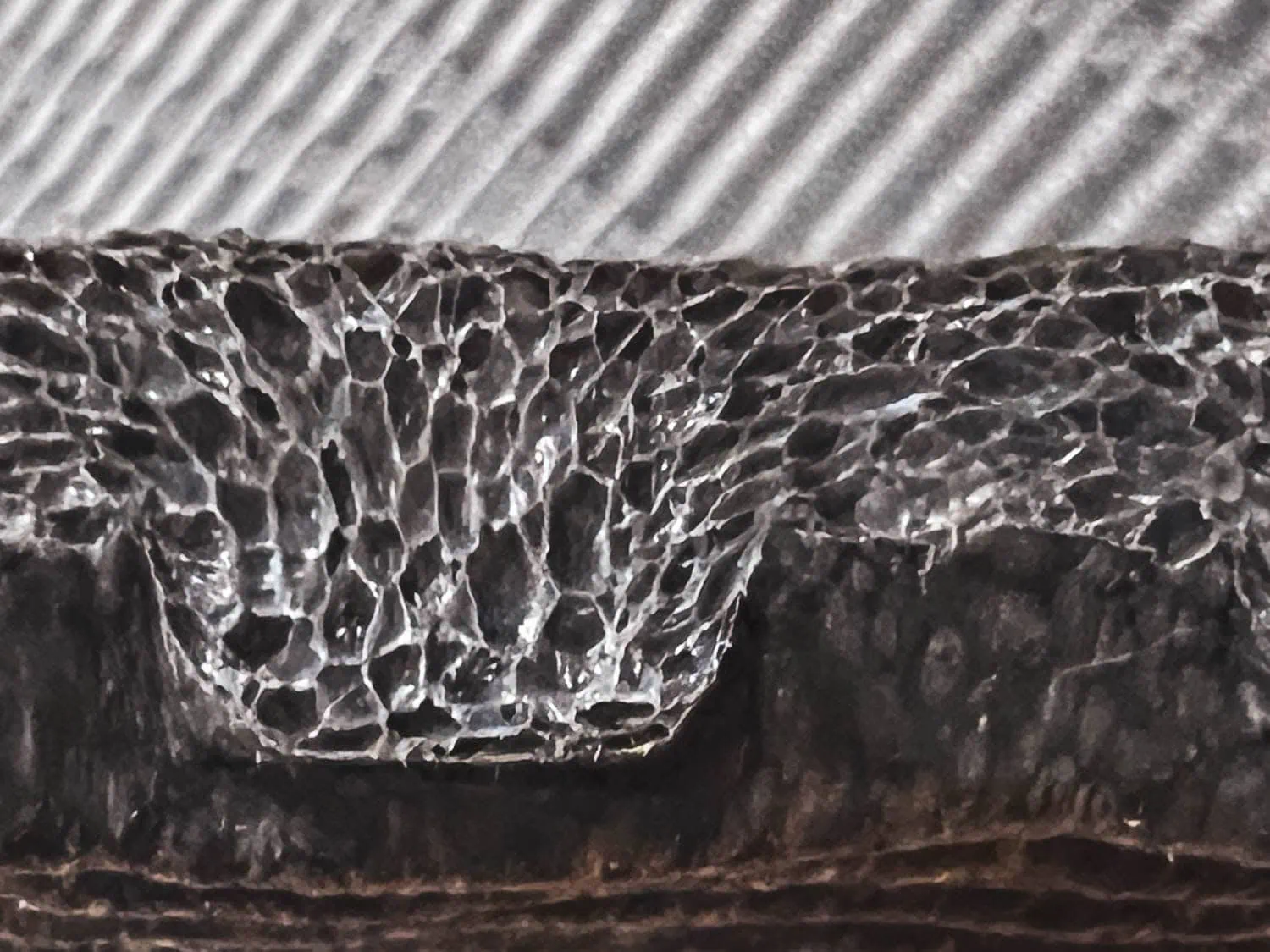
The selbstaufblasende Matte sitzt dazwischen: ein offenporiger Schaumkern, der sich beim Öffnen des Ventils selbst mit Luft füllt. Robust und bequem in der Handhabung, aber meist schwerer und voluminöser als eine reine Luftmatte. Im strengen UL-Bereich spielt sie deshalb eine Nebenrolle, für gemütlichere Touren mit etwas Gewichtsreserve ist sie eine solide, unkomplizierte Wahl.
Gewicht, Packmaß und Komfort: das Dreieck, in dem du entscheidest
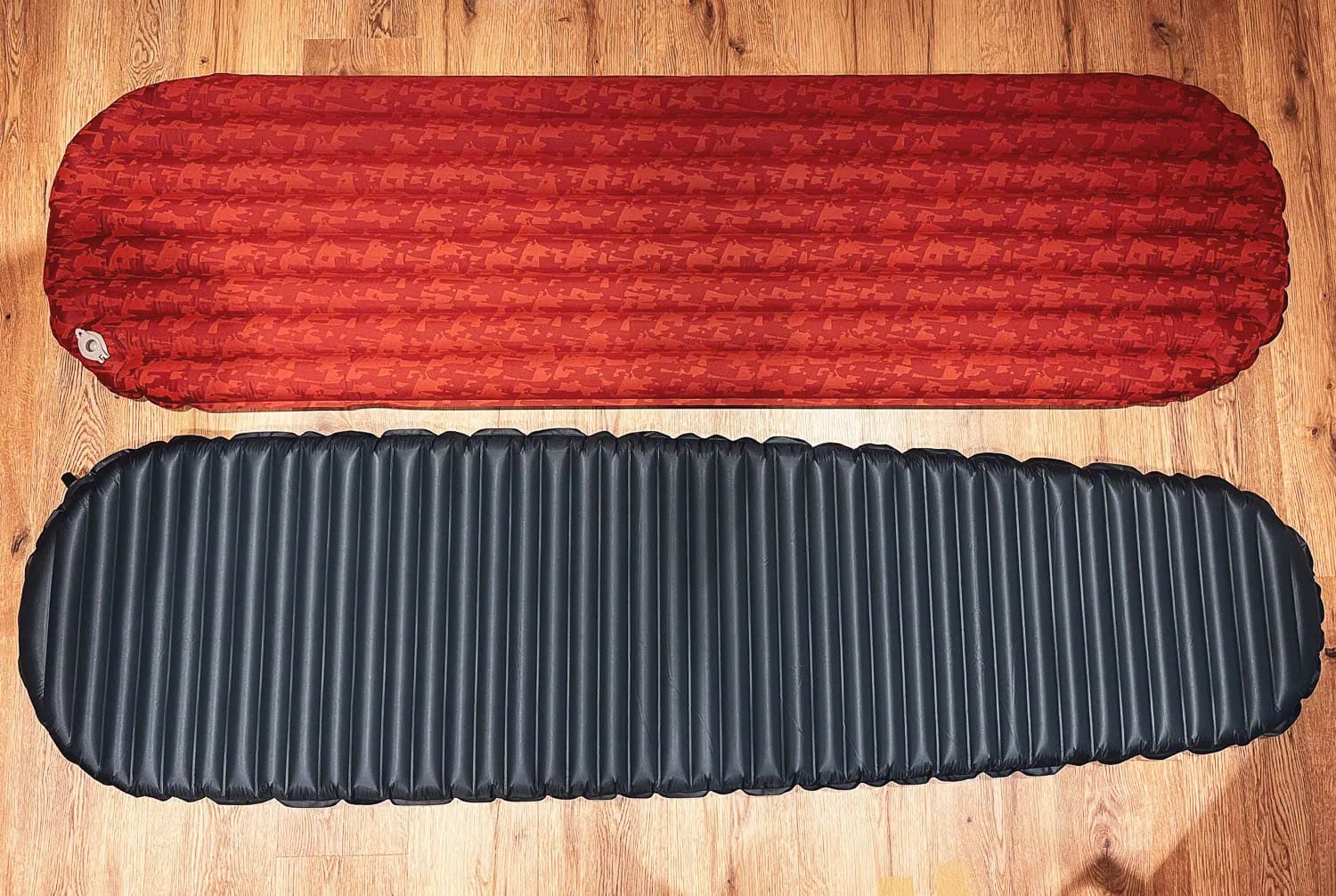
Jede Mattenwahl ist ein Kompromiss zwischen drei Größen, und du kannst nie alle drei gleichzeitig maximieren. Niedriges Gewicht, kleines Packmaß, hoher Komfort: such dir zwei aus, beim dritten machst du Abstriche. Eine 250-Gramm-Luftmatte ist leicht und klein, aber empfindlich und schmal. Eine dicke 7-cm-Komfortmatte schläft sich herrlich, wiegt aber schnell 500 Gramm und mehr. Eine Schaummatte ist leicht und unverwüstlich, dafür hart und sperrig.
Beim Gewicht gilt dasselbe wie bei der gesamten Ultraleicht-Packliste: Wiege selbst nach, statt den Herstellerangaben blind zu vertrauen. Meine Erfahrung über viele Modelle ist, dass die realen Gewichte oft ein paar Gramm über der Angabe liegen, mal darunter. Eine 8-Euro-Küchenwaage bringt hier mehr Klarheit als jeder Katalog. Und denk beim Packmaß an dein gesamtes Setup: Eine Matte, die sich klein rollt, lässt im Rucksack Platz für das, was du wirklich brauchst.

Drei Matten aus 2.400 Kilometern Trail
Statt dir eine generische Bestenliste hinzuwerfen, erzähle ich dir lieber von den drei Matten, die ich über Jahre tatsächlich unter dem Rücken hatte. Die Modelle haben sich seither weiterentwickelt, aber die Logik dahinter ist dieselbe geblieben, und sie hilft dir mehr bei der Entscheidung als jede Sterne-Wertung.
Auf der Alpendurchquerung von Wien nach Nizza, rund 1.900 Kilometer, lag ich auf einer aufblasbaren Therm-a-Rest NeoAir XLite. Über 40 Nächte, bis hinunter zu etwa minus 4 Grad, und ich bin als Seitenschläfer mit 1,97 Metern und um die 90 Kilo wahrlich kein einfacher Kandidat für eine schmale Matte. Sie hat geliefert: 6,3 cm Dicke, gewogene 354 Gramm, jeden Morgen ein ausgeruhter Rücken. Zwei Dinge, die kein Datenblatt verrät: Sie knistert anfangs beim Umdrehen, und nach einem langen Wandertag sind die 12 bis 15 Atemzüge zum Aufblasen eine kleine Überwindung. Beides nehme ich für den Komfort gern in Kauf.
Für die leichteren Schwarzwald-Touren, über 500 Kilometer in Summe, hatte ich die Therm-a-Rest UberLite dabei, mit 250 Gramm eine der leichtesten vollwertigen Luftmatten überhaupt. So bequem geht es bei diesem Gewicht bei kaum einer anderen Matte. Der Tradeoff ist die noch dünnere, empfindlichere Außenhaut, hier liegt man wirklich nur noch auf einem Hauch Material.
Und dann die Therm-a-Rest Z-Lite, die Schaummatte, die ich auf dem GR221 auf Mallorca außen am Rucksack hatte. Gewogene 370 Gramm, R 2,2, und in ihrer Kategorie quasi unkaputtbar, kein Stein und kein Dorn bringt sie um. Eine Lehre gab es trotzdem: Außen am Rucksack befestigt hat sie auf einer engen, zugewachsenen Passage von tiefhängenden Ästen ein paar Macken abbekommen. Unkaputtbar gegen Steine heißt eben nicht unkaputtbar gegen alles.
| Modell (Bauart) | Gewicht / R-Wert | Meine Erfahrung |
|---|---|---|
| Therm-a-Rest NeoAir XLite (aufblasbar) | ~354 g / R ~4,2 | Der Allrounder für lange Touren. Bester Schlaf, knistert anfangs, schmal für breite Schläfer. |
| Therm-a-Rest UberLite (aufblasbar) | ~250 g / R ~2,3 | Die Gramm-Jäger-Wahl für milde Nächte. Top Komfort fürs Gewicht, sehr empfindliche Haut. |
| Therm-a-Rest Z-Lite (Schaumstoff) | ~370 g / R ~2,0 | Unkaputtbar, sofort einsatzbereit, Sitzpad inklusive. Hart und sperrig, aber sorgenfrei. |

Inzwischen ist die Auswahl noch größer geworden: Marken wie Nemo, Sea to Summit, Exped und Big Agnes bauen exzellente Luftmatten, einige unter 250 Gramm bei gleichzeitig hohem R-Wert. Die Namen ändern sich, die Entscheidungslogik bleibt: erst der R-Wert, dann die Bauart nach Einsatz, dann das Feilschen ums Gewicht.
Die große Vergleichstabelle: ultraleichte Isomatten aller Klassen
Damit du nicht selbst Dutzende Datenblätter zusammensuchen musst, hier die Übersicht über die relevanten Modelle, geordnet nach den drei Bauarten und innerhalb jeder Klasse nach steigendem R-Wert (also vom Sommermodell zur Wintermatte). So findest du auf einen Blick die Matte, die zu deiner kältesten geplanten Nacht passt, und siehst, was sie dich an Gewicht und Geld kostet.
Aufblasbare Luftmatten (leicht, bequem, kompakt)
| Modell | Gewicht / R-Wert | Preis & Einsatz |
|---|---|---|
| Therm-a-Rest NeoAir UberLite | ~250 g / R 2,3 | ~210 € · für Gramm-Minimalisten, milde Nächte |
| Therm-a-Rest NeoAir XLite NXT | ~354 g / R 4,5 | ~265 € · der Allround-Maßstab |
| Exped Ultra 3R | ~365 g / R 2,9 | ~170 € · leichte Drei-Jahreszeiten-Matte |
| Big Agnes Zoom UL | ~395 g / R 4,3 | ~180 € · komfortabel, drei Jahreszeiten |
| Nemo Tensor All-Season | ~400 g / R 5,4 | ~230 € · viel Wärme fürs Gewicht |
| Therm-a-Rest NeoAir XTherm NXT | ~439 g / R 7,3 | ~280 € · echte Wintermatte |
| Klymit Insulated Static V | ~450 g / R ~4,4 | ~90 € · günstiger Einstieg in Luftmatten |
| Decathlon Forclaz MT900 Air | ~460 g / R ~3 | ~90 € · starkes Preis-Leistungs-Verhältnis (R-Wert nicht ASTM-zertifiziert) |
| Sea to Summit Ether Light XT Insulated | ~480 g / R 3,2 | ~190 € · 10 cm dick, ideal für Seitenschläfer |
| Big Agnes Rapide SL Insulated | ~480 g / R 4,8 | ~160 € · breit und bequem |
| Nemo Tensor Extreme Conditions | ~480 g / R 8,5 | ~290 € · Hochwinter und Expedition |
| Exped Ultra 5R | ~535 g / R 4,8 | ~210 € · warm und komfortabel |
Selbstaufblasende Matten (robust, unkompliziert)
| Modell | Gewicht / R-Wert | Preis & Einsatz |
|---|---|---|
| Therm-a-Rest ProLite | ~460 g / R 2,4 | ~110 € · leichteste selbstaufblasende Option |
| Therm-a-Rest ProLite Plus | ~570 g / R 3,2 | ~140 € · wärmer und dicker |
| Sea to Summit Ultralight SI | ~600 g / R ~3,1 | ~130 € · unkompliziert und bequem |
Schaumstoffmatten (unkaputtbar, sofort einsatzbereit)
| Modell | Gewicht / R-Wert | Preis & Einsatz |
|---|---|---|
| Therm-a-Rest RidgeRest SOLite | ~400 g / R 2,1 | ~45 € · günstig und unverwüstlich |
| Therm-a-Rest Z-Lite Sol | ~410 g / R 2,0 | ~50 € · der unkaputtbare Klassiker, Sitzpad inklusive |
| Nemo Switchback | ~415 g / R 2,0 | ~55 € · komfortablere Schaummatte |
Isomatte und Rucksack: das übersehene Zusammenspiel
Eine Isomatte existiert nie allein, sie ist Teil eines Systems, und sie hängt enger mit deinem Rucksack zusammen, als die meisten Kaufberatungen zugeben. Zwei Verbindungen lohnen sich zu kennen.
Erstens das Packmaß. Eine aufblasbare Matte verschwindet im Rucksack, eine Schaummatte muss meistens außen ran oder quer als Liner in den Packsack. Das beeinflusst, wie viel Volumen dir für den Rest bleibt. Die 54 Liter des Agilist haben wir genau dafür ausgelegt: genug Raum, damit eine komplette Zelt-Packliste mit Schlafsystem hineinpasst, ohne dass du die Matte verzweifelt außen festzurrst, wo sie sich an Ästen aufreibt (siehe Mallorca).
Zweitens der Schutz. Eine Luftmatte ist nur so gut wie die Nacht, in der sie kein Loch bekommt, und nur so trocken wie der Rucksack, der sie trägt. Der Agilist besteht aus Ultra 200X und hat getapte Nähte. Heißt konkret: Auch ein durchregneter Tag erreicht deine Matte und deinen Quilt im Inneren nicht, du rollst abends ein trockenes Schlafsystem aus, statt in eine feuchte Matte zu pusten.
| Komponente | Weight |
|---|---|
| Isomatte (Luftmatte, R ~4) | ~350 g |
| Quilt / Schlafsack (Komfort ~5 °C) | ~600 g |
| Aufblasbares Kopfkissen | ~60 g |
| SCHLAFSYSTEM GESAMT | ~1.010 g |
Gut ein Drittel deines kompletten Schlafsystem-Gewichts steckt also in der Matte. Das zeigt, warum es sich lohnt, hier nicht blind zu sparen, aber auch nicht sinnlos Gramm zu jagen: Die Matte muss zum Quilt und zur Jahreszeit passen, dann stimmt das System.
Worauf du beim Kauf wirklich achten solltest
Wenn du vor dem Regal oder dem Warenkorb stehst, geh diese sechs Punkte der Reihe nach durch. In dieser Reihenfolge, denn sie baut aufeinander auf.
Zuerst den R-Wert festlegen.
Überleg dir ehrlich, bei welchen Temperaturen du wirklich unterwegs bist. Für drei Jahreszeiten in den meisten Mittelgebirgen und Alpen reicht R 3 bis 4. Lieber etwas Reserve als eine kalte Nacht, aber jagst du Winter-R-Werte für Sommertouren, schleppst du unnötig Gewicht.
Bauart nach Einsatz wählen, nicht nach Hype.
Lange Touren mit Komfortanspruch: aufblasbar. Robustheit, Sorgenfreiheit und Doppelnutzen am Rucksack: Schaumstoff. Gemütlich und unkompliziert mit Gewichtsreserve: selbstaufblasend.
Gewicht selbst nachwiegen.
Herstellerangaben sind Richtwerte. Eine Küchenwaage für ein paar Euro schafft Klarheit, gerade wenn du zwischen zwei Modellen schwankst.
Breite und Form nicht unterschätzen.
Schmale Mumienmatten sparen Gewicht, aber wer sich nachts dreht oder breit gebaut ist, rutscht herunter. Im Zweifel die etwas breitere Variante, der Schlaf dankt es dir über viele Nächte.
Geräusch und Komfort mitdenken.
Sehr leichte Luftmatten knistern oft anfangs. Für die meisten lässt das nach, lichtempfindliche Schläfer sollten es trotzdem wissen. Wenn möglich, vorher probeliegen.
Reparierbarkeit und Pflege einplanen.
Ein Flicken-Set gehört bei jeder Luftmatte ins Gepäck. Und lagere die Matte zu Hause ausgerollt mit offenem Ventil, nicht eng gerollt, das hält den Schaum und die Beschichtung jahrelang fit.
Eine letzte ehrliche Einordnung: Die perfekte Isomatte für alle gibt es nicht. Es gibt die, die zu deinem Körper, deinem Einsatz und deinem restlichen Setup passt. Wenn du den R-Wert ehrlich wählst, die Bauart nach deinem Trail entscheidest und das Gewicht selbst nachwiegst, machst du fast nichts falsch.
Häufige Fragen zur ultraleichten Isomatte
For spring to autumn in low mountain ranges and temperate Alps, an R-value of around 3 to 4 is sufficient. For nights around freezing point, you should aim for R 4 to 5, and for true winter with snow, R 5 and above. R-values can be added together; a foam mat under the air mat will specifically increase insulation.
Inflatable mats are lighter, pack smaller, and significantly more comfortable, but are susceptible to punctures and need to be inflated. Foam mats are practically indestructible, ready for immediate use, and can be used as a seat pad, but are thinner, harder, and bulkier. For long tours with a demand for comfort, inflatable is usually the better choice; for robustness and peace of mind, foam.
Full-sized ultralight air mattresses typically weigh between 250 and 400 grams, depending on the model and size. Below 250 grams, they tend to be very narrow or have a very delicate outer skin. If in doubt, weigh it yourself, as the actual weights often vary slightly from the manufacturer's specifications.
Very lightweight air mattresses made of thin material tend to crackle initially, especially when turning over. With most models, this noticeably subsides after a few nights, either due to material wear or getting used to it. Those who sleep sensitively should be aware of this before purchasing.
Place a thin groundsheet or foam mat underneath the air mat, check the pitching spot for sharp stones and thorns before setting up, and transport the mat inside your rucksack rather than on the outside where it can rub against branches. A small repair kit should be included on every trip with an air mat.
Store the mat at home unrolled or loosely rolled with the valve open, not tightly compressed in its stuff sack. This will keep the foam core and coating elastic for years. Storing it tightly compressed for extended periods will cause the material to degrade more quickly.
Grundsätzlich jede, entscheidend ist das Packmaß. Aufblasbare Matten verschwinden komplett im Rucksack. Eine gefaltete Schaummatte kann zusätzlich als Rückenversteifung und Sitzunterlage dienen, das ist ein klassischer Doppelnutzen im rahmenlosen UL-Setup. Wichtig ist genug Volumen, damit die Matte nicht außen festgezurrt werden muss.
Dein nächster Schritt
Du weißt jetzt, dass der R-Wert die Leitzahl ist, dass die Bauart sich nach deinem Einsatz richtet und dass die Matte ein Drittel deines Schlafsystem-Gewichts ausmacht. Mein Rat: Leg zuerst den R-Wert fest, entscheide dann ehrlich zwischen Komfort (aufblasbar) und Sorgenfreiheit (Schaumstoff), und denk die Matte im Zusammenhang mit deinem Rucksack und Quilt, nicht isoliert.
Und wenn dein Schlafsystem erst einmal leicht und trocken im Rucksack sitzt, sollte der Rucksack mithalten: Der Agilist trägt mit 570 g, vollständig getapten Nähten und 54 Litern Volumen genau das Setup, von dem dieser Artikel handelt, die Luftmatte trocken im Inneren, die Schaummatte als Rahmen an der Rückenwand. Ein System, das zusammenpasst, schläft sich besser als jedes Einzelteil für sich.